 |
Over many a quaint and curious volume of forgotten lore—
While I nodded, nearly napping, suddenly there came a tapping,
As of some one gently rapping, rapping at my chamber door.
“’Tis some visitor,” I muttered, “tapping at my chamber door—
Only this and nothing more.”
Ah, distinctly I remember it was in the bleak December;
And each separate dying ember wrought its ghost upon the floor.
Eagerly I wished the morrow;—vainly I had sought to borrow
From my books surcease of sorrow—sorrow for the lost Lenore—
For the rare and radiant maiden whom the angels name Lenore—
Nameless here for evermore.
And the silken, sad, uncertain rustling of each purple curtain
Thrilled me—filled me with fantastic terrors never felt before;
So that now, to still the beating of my heart, I stood repeating
“’Tis some visitor entreating entrance at my chamber door—
Some late visitor entreating entrance at my chamber door;—
This it is and nothing more.”
Presently my soul grew stronger; hesitating then no longer,
“Sir,” said I, “or Madam, truly your forgiveness I implore;
But the fact is I was napping, and so gently you came rapping,
And so faintly you came tapping, tapping at my chamber door,
That I scarce was sure I heard you”—here I opened wide the door;—
Darkness there and nothing more.
Deep into that darkness peering, long I stood there wondering, fearing,
Doubting, dreaming dreams no mortal ever dared to dream before;
But the silence was unbroken, and the stillness gave no token,
And the only word there spoken was the whispered word, “Lenore?”
This I whispered, and an echo murmured back the word, “Lenore!”—
Merely this and nothing more.
Back into the chamber turning, all my soul within me burning,
Soon again I heard a tapping somewhat louder than before.
“Surely,” said I, “surely that is something at my window lattice;
Let me see, then, what thereat is, and this mystery explore—
Let my heart be still a moment and this mystery explore;—
’Tis the wind and nothing more!”
Open here I flung the shutter, when, with many a flirt and flutter,
In there stepped a stately Raven of the saintly days of yore;
Not the least obeisance made he; not a minute stopped or stayed he;
But, with mien of lord or lady, perched above my chamber door—
Perched upon a bust of Pallas just above my chamber door—
Perched, and sat, and nothing more.
Then this ebony bird beguiling my sad fancy into smiling,
By the grave and stern decorum of the countenance it wore,
“Though thy crest be shorn and shaven, thou,” I said, “art sure no craven,
Ghastly grim and ancient Raven wandering from the Nightly shore—
Tell me what thy lordly name is on the Night’s Plutonian shore!”
Quoth the Raven “Nevermore.”
Much I marvelled this ungainly fowl to hear discourse so plainly,
Though its answer little meaning—little relevancy bore;
For we cannot help agreeing that no living human being
Ever yet was blessed with seeing bird above his chamber door—
Bird or beast upon the sculptured bust above his chamber door,
With such name as “Nevermore.”
But the Raven, sitting lonely on the placid bust, spoke only
That one word, as if his soul in that one word he did outpour.
Nothing farther then he uttered—not a feather then he fluttered—
Till I scarcely more than muttered “Other friends have flown before—
On the morrow he will leave me, as my Hopes have flown before.”
Then the bird said “Nevermore.”
Startled at the stillness broken by reply so aptly spoken,
“Doubtless,” said I, “what it utters is its only stock and store
Caught from some unhappy master whom unmerciful Disaster
Followed fast and followed faster till his songs one burden bore—
Till the dirges of his Hope that melancholy burden bore
Of ‘Never—nevermore’.”
But the Raven still beguiling all my fancy into smiling,
Straight I wheeled a cushioned seat in front of bird, and bust and door;
Then, upon the velvet sinking, I betook myself to linking
Fancy unto fancy, thinking what this ominous bird of yore—
What this grim, ungainly, ghastly, gaunt, and ominous bird of yore
Meant in croaking “Nevermore.”
This I sat engaged in guessing, but no syllable expressing
To the fowl whose fiery eyes now burned into my bosom’s core;
This and more I sat divining, with my head at ease reclining
On the cushion’s velvet lining that the lamp-light gloated o’er,
But whose velvet-violet lining with the lamp-light gloating o’er,
She shall press, ah, nevermore!
Then, methought, the air grew denser, perfumed from an unseen censer
Swung by Seraphim whose foot-falls tinkled on the tufted floor.
“Wretch,” I cried, “thy God hath lent thee—by these angels he hath sent thee
Respite—respite and nepenthe from thy memories of Lenore;
Quaff, oh quaff this kind nepenthe and forget this lost Lenore!”
Quoth the Raven “Nevermore.”
“Prophet!” said I, “thing of evil!—prophet still, if bird or devil!—
Whether Tempter sent, or whether tempest tossed thee here ashore,
Desolate yet all undaunted, on this desert land enchanted—
On this home by Horror haunted—tell me truly, I implore—
Is there—is there balm in Gilead?—tell me—tell me, I implore!”
Quoth the Raven “Nevermore.”
“Prophet!” said I, “thing of evil!—prophet still, if bird or devil!
By that Heaven that bends above us—by that God we both adore—
Tell this soul with sorrow laden if, within the distant Aidenn,
It shall clasp a sainted maiden whom the angels name Lenore—
Clasp a rare and radiant maiden whom the angels name Lenore.”
Quoth the Raven “Nevermore.”
“Be that word our sign of parting, bird or fiend!” I shrieked, upstarting—
“Get thee back into the tempest and the Night’s Plutonian shore!
Leave no black plume as a token of that lie thy soul hath spoken!
Leave my loneliness unbroken!—quit the bust above my door!
Take thy beak from out my heart, and take thy form from off my door!”
Quoth the Raven “Nevermore.”
And the Raven, never flitting, still is sitting, still is sitting
On the pallid bust of Pallas just above my chamber door;
And his eyes have all the seeming of a demon’s that is dreaming,
And the lamp-light o’er him streaming throws his shadow on the floor;
And my soul from out that shadow that lies floating on the floor
Shall be lifted—nevermore!
 |
※saintly :relating to, resembling, or befitting a saint( holy)
※yore: time past and especially long past
※obeisance :obedience and respect ,or something you do which express this
※beguile: to persuade ,attract or interest ,sometimes in oreder to deceive
※decorum: behaviour that is controlled ,calm and polite
※relevancy: It's a noun-->something relevant
※ghastly:(informal)1.unpleasant and shocking 2.extremely bad 3.(literally)describes someone who looks very ill or very shocked ,especially with a very pale face.
※gaunt(I've learn this word from lately class): very thin,especially because of illness or hunger
※quaff: to drink something quickly or in large amounts
※nepenthe: (1)a potion used by the ancients to induce forgetfulness of pain or sorrow
(2) something capable of causing oblivion of grief or suffering
※come down: to feel less exited after a very enjoyable experience
=decline
=decrease
About the author Edgar Allan Poe
(2) something capable of causing oblivion of grief or suffering
※come down: to feel less exited after a very enjoyable experience
=decline
=decrease
About the author Edgar Allan Poe

Edgar Allan Poe was an American writer, editor, and literary critic. Poe is best known for his poetry and short stories, particularly his tales of mystery and the macabre. He is widely regarded as a central figure of Romanticism in the United States and American literature as a whole, and he was one of the country's earliest practitioners of the short story. Poe is generally considered the inventor of the detective fiction genre and is further credited with contributing to the emerging genre of science fiction. He was the first well-known American writer to try to earn a living through writing alone, resulting in a financially difficult life and career.
Poe was born in Boston, the second child of two actors. His father abandoned the family in 1810, and his mother died the following year. Thus orphaned, the child was taken in by John and Frances Allan of Richmond, Virginia. They never formally adopted him, but Poe was with them well into young adulthood. Tension developed later as John Allan and Edgar repeatedly clashed over debts, including those incurred by gambling, and the cost of secondary education for the young man. Poe attended the University of Virginia for one semester but left due to lack of money. Poe quarreled with Allan over the funds for his education and enlisted in the Army in 1827 under an assumed name. It was at this time that his publishing career began, albeit humbly, with the anonymous collection of poems Tamerlane and Other Poems (1827), credited only to "a Bostonian". With the death of Frances Allan in 1829, Poe and Allan reached a temporary rapprochement. However, Poe later failed as an officer cadet at West Point, declaring a firm wish to be a poet and writer, and he ultimately parted ways with John Allan.
Poe switched his focus to prose and spent the next several years working for literary journals and periodicals, becoming known for his own style of literary criticism. His work forced him to move among several cities, including Baltimore, Philadelphia, and New York City. In Richmond in 1836, he married Virginia Clemm, his 13-year-old cousin. In January 1845, Poe published his poem "The Raven" to instant success. His wife died of tuberculosis two years after its publication. For years, he had been planning to produce his own journal The Penn (later renamed The Stylus), though he died before it could be produced. Poe died in Baltimore on October 7, 1849, at age 40; the cause of his death is unknown and has been variously attributed to alcohol, brain congestion, cholera, drugs, heart disease, rabies, suicide, tuberculosis, and other agents.
Poe and his works influenced literature in the United States and around the world, as well as in specialized fields such as cosmology and cryptography. Poe and his work appear throughout popular culture in literature, music, films, and television. A number of his homes are dedicated museums today. The Mystery Writers of America present an annual award known as the Edgar Award for distinguished work in the mystery genre.
※macabre: describes something that is very strange and unpleasant because it is connected with death or violence
=spooky
=ghastly
=grim
=frightening
=gruesome(extremely unpleasant and shocking ,and usually dealing with death or injury )
*gruesome murder
※Romanticism: a style of art , music and literature that was common un Europe in the late 18th and earky 19th centuries , which describes the beauty of nature and emphsizes the importance of human emotions
※practitioner: someone involved in a skilled job or activity
※prose: written language in its ordinary from rather than poetry
=composition
=essay
=text
=writing
※agent: (cause) a person or thing produces a paricular effect or change
※【brain】congestion: describes lungs or other body parts that have become too full of blood or other liquid.


※cholera: a serious infection of the bowels caused by drinking infected water or eating infected food, causing diarrhoea, vomiting and often death
※diarrhoea: an illness in which the body's solid waste is more liquid tha usual and comes out of the body more often.
※cosmology:
※cryptography
How you're reeling me in with the games you play then you hang me out to dry
Summary:
The unnamed narrator is wearily perusing an old book one bleak December night when he hears a tapping at the door to his room. He tells himself that it is merely a visitor, and he awaits tomorrow because he cannot find release in his sorrow over the death of Lenore. The rustling curtains frighten him, but he decides that it must be some late visitor and, going to the door, he asks for forgiveness from the visitor because he had been napping. However, when he opens the door, he sees and hears nothing except the word "Lenore," an echo of his own words.
Returning to his room, he again hears a tapping and reasons that it was probably the wind outside his window. When he opens the window, however, a raven enters and promptly perches "upon a bust of Pallas" above his door. Its grave appearance amuses the narrator, who asks it for its names. The raven responds, "Nevermore." He does not understand the reply, but the raven says nothing else until the narrator predicts aloud that it will leave him tomorrow like the rest of his friends. Then the bird again says, "Nevermore."
 |
Startled, the narrator says that the raven must have learned this word from some unfortunate owner whose ill luck caused him to repeat the word frequently. Smiling, the narrator sits in front of the ominous raven to ponder about the meaning of its word. The raven continues to stare at him, as the narrator sits in the chair that Lenore will never again occupy. He then feels that angels have approached, and angrily calls the raven an evil prophet. He asks if there is respite in Gilead and if he will again see Lenore in Heaven, but the raven only responds, "Nevermore." In a fury, the narrator demands that the raven go back into the night and leave him alone again, but the raven says, "Nevermore," and it does not leave the bust of Pallas. The narrator feels that his soul will "nevermore" leave the raven's shadow.
 |
"The Raven" is the most famous of Poe's poems, notable for its melodic and dramatic qualities. The meter of the poem is mostly trochaic octameter, with eight stressed-unstressed two-syllable feet per lines. Combined with the predominating ABCBBB end rhyme scheme and the frequent use of internal rhyme, the trochaic octameter and the refrain of "nothing more" and "nevermore" give the poem a musical lilt when read aloud. Poe also emphasizes the "O" sound in words such as "Lenore" and "nevermore" in order to underline the melancholy and lonely sound of the poem and to establish the overall atmosphere. Finally, the repetition of "nevermore" gives a circular sense to the poem and contributes to what Poe termed the unity of effect, where each word and line adds to the larger meaning of the poem.
The unnamed narrator appears in a typically Gothic setting with a lonely apartment, a dying fire, and a "bleak December" night while wearily studying his books in an attempt to distract himself from his troubles. He thinks occasionally of Lenore but is generally able to control his emotions, although the effort required to do so tires him and makes his words equally slow and outwardly pacified. However, over the course of the narrative, the protagonist becomes more and more agitated both in mind and in action, a progression that he demonstrates through his rationalizations and eventually through his increasingly exclamation-ridden monologue. In every stanza near the end, however, his exclamations are punctuated by the calm desolation of the sentence "Quoth the Raven, 'Nevermore,'" reflecting the despair of his soul.
Like a number of Poe's poems such as "Ulalume" and "Annabel Lee," "The Raven" refers to an agonized protagonist's memories of a deceased woman. Through poetry, Lenore's premature death is implicitly made aesthetic, and the narrator is unable to free himself of his reliance upon her memory. He asks the raven if there is "balm in Gilead" and therefore spiritual salvation, or if Lenore truly exists in the afterlife, but the raven confirms his worst suspicions by rejecting his supplications. The fear of death or of oblivion informs much of Poe's writing, and "The Raven" is one of his bleakest publications because it provides such a definitively negative answer. By contrast, when Poe uses the name Lenore in a similar situation in the poem "Lenore," the protagonist Guy de Vere concludes that he need not cry in his mourning because he is confident that he will meet Lenore in heaven.
Poe's choice of a raven as the bearer of ill news is appropriate for a number of reasons. Originally, Poe sought only a dumb beast that was capable of producing human-like sounds without understanding the words' meaning, and he claimed that earlier conceptions of "The Raven" included the use of a parrot. In this sense, the raven is important because it allows the narrator to be both the deliverer and interpreter of the sinister message, without the existence of a blatantly supernatural intervention. At the same time, the raven's black feather have traditionally been considered a magical sign of ill omen, and Poe may also be referring to Norse mythology, where the god Odin had two ravens named Hugin and Munin, which respectively meant "thought" and "memory." The narrator is a student and thus follows Hugin, but Munin continually interrupts his thoughts and in this case takes a physical form by landing on the bust of Pallas, which alludes to Athena, the Greek goddess of learning.
Due to the late hour of the poem's setting and to the narrator's mental turmoil, the poem calls the narrator's reliability into question. At first the narrator attempts to give his experiences a rational explanation, but by the end of the poem, he has ceased to give the raven any interpretation beyond that which he invents in his own head. The raven thus serves as a fragment of his soul and as the animal equivalent of Psyche in the poem "Ulalume." Each figure represents its respective character's subconscious that instinctively understands his need to obsess and to mourn. As in "Ulalume," the protagonist is unable to avoid the recollection of his beloved, but whereas Psyche of "Ulalume" sought to prevent the unearthing of painful memories, the raven actively stimulates his thoughts of Lenore, and he effectively causes his own fate through the medium of a non-sentient animal.
------------------------------------------------------------------------------------------------------------
※scarecrow(scare+crow )
 |
| Now here is the cutest scarecrow which probably cann't scare the ravens away |
 |
| raven represents omen |
---------------------------------------------------------------------------------------------------------------------
※man-→is the prefix which represents "hand"
manipulate
manual
manufactory
and...
Manicure

A manicure is a cosmetic beauty treatment for the fingernails and hands, performed at home or in a nail salon. A manicure consists of filing and shaping of the free edge, pushing (with a cuticle pusher) and clipping (with cuticle nippers) any nonliving tissue (limited to cuticle and hangnails), treatments, massage of the hand, and the application of fingernail polish. When applied to the toenails and feet, this treatment is referred to as a pedicure.
Some manicures can include the painting of pictures or designs on the nails, or applying small decals or imitation jewels. Other nail treatments may include the application of artificial nail gel nails, tips, or acrylics, some of which are referred to as French manicures.

In many areas, manicurists are licensed and follow regulations. Since skin is manipulated and is sometimes trimmed, there is a certain risk of spreading infection when tools are used across many people; therefore, sanitation is a serious issue.
--------------------------------------------------------------------------------------------------------------------
History of manicure
 |
The word manicure comes from a combination of the Latin words “manus” – hand and “cura” – care. The art of manicure has an ancient history. Today, manicure means a system for hand care, which includes skin and nail care, medical treatments and procedures, painting techniques and even fake nail application.
In the beginning of the 19th century the fashion in America was for short, almond-shaped nails. Women covered them in aromatic oils and polished them with a soft cloth. Manicure was done using metal instruments, scissors and various acids.
Manicure tools eventually evolved and in 1830 a doctor named Sits was the first to use an orange-tree file on the nails of his patients. His niece took this a step further by inventing a whole nail care system. This system was cheap and spread all around the USA, where every woman, regardless of social status or income could use it to care for her nails.
In the early 20s of the 20th century, the automobile industry develops new paints, which are adapted to cover also nails. Pink nail polish came out on the market in 1925 and obtained instant popularity. The then fashionable “lunar manicure” is done when a stripe of pink nail polish is drawn in the center of the nail, while the rest of it is left free and uncovered.
In the 1930s the lunar manicure now accepted all tones of red. The fashion shifted towards long round nails completely covered in red.
Later with the discovery of nail polish removers the industry grew faster than ever. Brothers Joseph and Charles Revsoni founded the Revlon Company, which produced clear nail polish based on pigments, not paint. This created the possibility of different shades of color. The Max Factor Company offered a smooth nail polish in the color of turquoise pushing the boundaries of the dominating red tones and bringing manicure into a whole new era.
In 1937 in America a patent was given to a product which strengthens the nail.
By 1950 the manicure branch was one of the strongest of the cosmetic industry. Basics of manicure began to be publicly taught by beauticians and hair dressers.
The 70 was the acrylic period of manicure. The profession of a manicure designer was then first defined as a specialist who can paint and pierce nails. These specialists soon became the ones who dictated this field of fashion.
Today, manicure has reached the level of art and is an inseparable part of every successful woman’s life.
---------------------------------------------------------------------------------------------------------------------
Attack on Pearl Harbor
 |
| Pearl Harbor |
Pacific War
The attack on Pearl Harbor, also known as the Battle of Pearl Harbor, the Hawaii Operation or Operation AI by the Japanese Imperial General Headquarters,and Operation Z during planning, was a surprise military strike by the Imperial Japanese Navy Air Service against the United States naval base at Pearl Harbor, Hawaii Territory, on the morning of December 7, 1941. The attack led to the United States' entry into World War II.
Japan intended the attack as a preventive action to keep the U.S. Pacific Fleet from interfering with military actions they planned in Southeast Asia against overseas territories of the United Kingdom, the Netherlands, and the United States. Over the next seven hours there were coordinated Japanese attacks on the U.S.-held Philippines, Guam and Wake Island and on the British Empire in Malaya, Singapore, and Hong Kong.
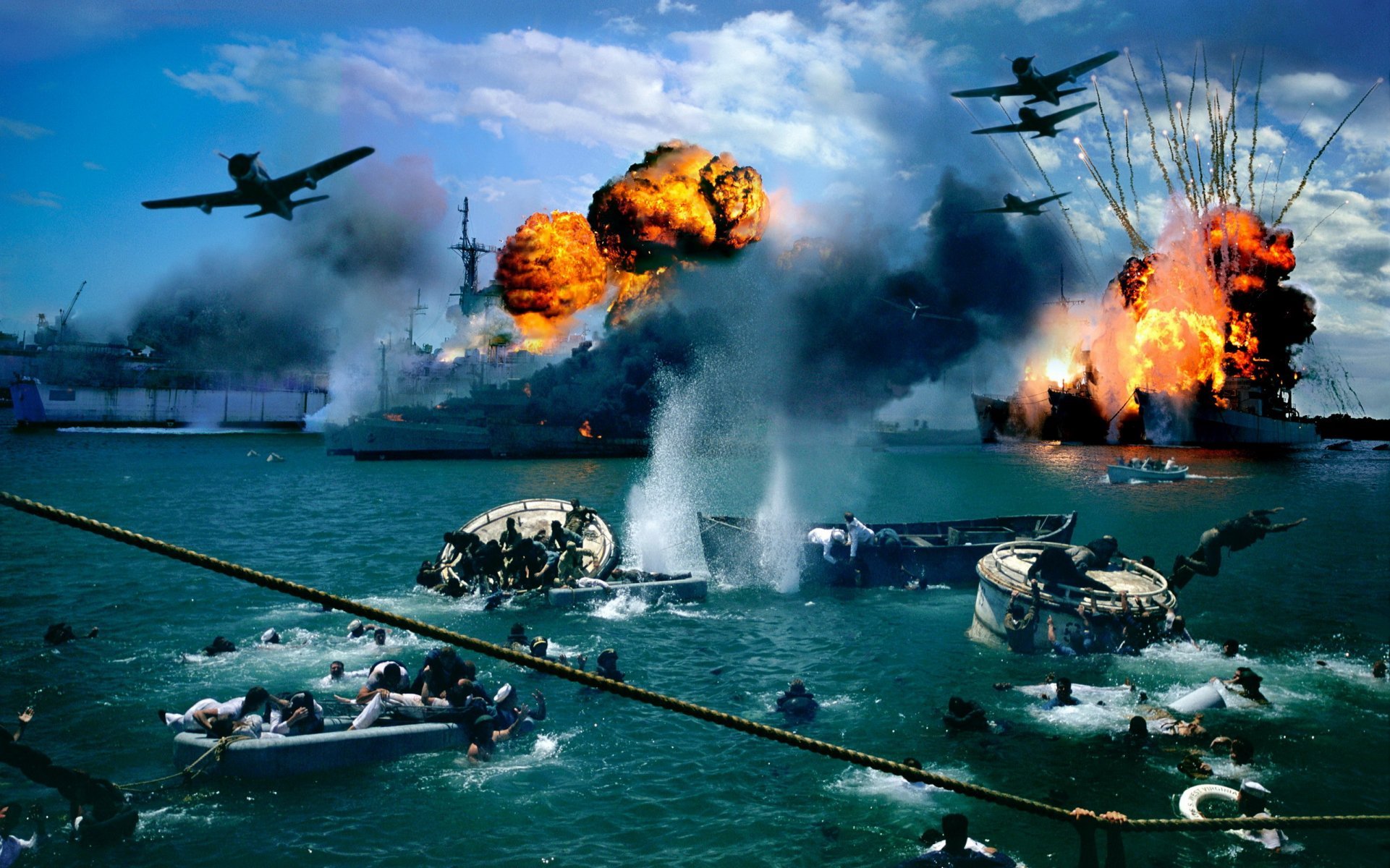 |
The attack commenced at 7:48 a.m. Hawaiian Time. The base was attacked by 353 Imperial Japanese fighter planes, bombers, and torpedo planes in two waves, launched from six aircraft carriers.All eight U.S. Navy battleships were damaged, with four sunk. All but the USS Arizona were later raised, and six were returned to service and went on to fight in the war. The Japanese also sank or damaged three cruisers, three destroyers, an anti-aircraft training ship,and one minelayer. 188 U.S. aircraft were destroyed; 2,403 Americans were killed and 1,178 others were wounded. Important base installations such as the power station, shipyard, maintenance, and fuel and torpedo storage facilities, as well as the submarine piers and headquarters building (also home of the intelligence section) were not attacked. Japanese losses were light: 29 aircraft and five midget submarines lost, and 64 servicemen killed. One Japanese sailor, Kazuo Sakamaki, was captured.
The undeclared assault came as a profound shock to the American people and led directly to the American entry into World War II in both the Pacific and European theaters. The following day, December 8, the United States declared war on Japan.Domestic support for non-interventionism, which had been fading since the Fall of France in 1940,disappeared. Clandestine support of the United Kingdom (e.g., the Neutrality Patrol) was replaced by active alliance. Subsequent operations by the U.S. prompted Germany and Italy to declare war on the U.S. on December 11, which was reciprocated by the U.S. the same day.
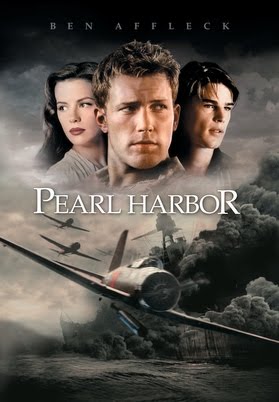 |
There were numerous historical precedents for unannounced military action by Japan. However, the lack of any formal warning, particularly while negotiations were still apparently ongoing, led President Franklin D. Roosevelt to proclaim December 7, 1941, "a date which will live in infamy". Because the attack happened without a declaration of war and without explicit warning, the attack on Pearl Harbor was judged by the Tokyo Trials to be a war crime.
--------------------------------------------------------------------------------------------------------------
Walt Whitman ----Children of Adam
 |
TO THE GARDEN THE WORLD
To the garden the world anew ascending,
Potent mates, daughters, sons, preluding,
The love, the life of their bodies, meaning and being,
Curious here behold my resurrection after slumber,
The revolving cycles in their wide sweep having brought me again,
Amorous, mature, all beautiful to me, all wondrous,
My limbs and the quivering fire that ever plays through them, for
reasons, most wondrous,
Existing I peer and penetrate still,
Content with the present, content with the past,
By my side or back of me Eve following,
Or in front, and I following her just the same.
FROM PENT-UP ACHING RIVERS.
FROM pent-up aching rivers,
From that of myself without which I were nothing,
From what I am determined to make illustrious, even if I stand
sole among men,
From my own voice resonant, singing the phallus,
Singing the song of procreation,
Singing the need of superb children and therein superb grown
people,
Singing the muscular urge and the blending,
Singing the bedfellow's song, (O resistless yearning!
O for any and each the body correlative attracting!
Summary &Analysis
A group of fifteen poems in the 1860 version of Leaves of Grass was entitled Enfans d'Adam. In 1867, these poems, after a few changes, were retitled Children of Adam. In the 1892 edition, the group consists of sixteen poems.
The major themes of Children of Adam are procreation and physical love between man and woman. The themes are dealt with through imagery rich in Christian tradition. Whitman uses many Christian concepts in his own unique way to express his individual precepts for mankind.
Fundamental to Christian belief is the story of the Fall of Man, interpreted either literally or symbolically. Adam and Eve, falling prey to Satan's temptation, disobeyed the divine command and ate the forbidden fruit of knowledge. This act of disobedience resulted in Original Sin, the inheritance of humanity. Man is therefore a born sinner, and his only hope of salvation lies in the grace of God, attained through Jesus Christ.
Whitman reverses this traditional Christian tenet. He asserts that it is not Adam but Adam's children who have really lost the Garden of Eden. Adam's children can regain this lost paradise not by denying the flesh, which had been a Puritan belief, but by accepting it. Man will then be reborn through this glorification of his body, for the human body is as sacred as the spirit. Thus, man is not born debased as a result of Original Sin. He should be proud of his heritage and of the "Adamic" in him.
The theme of procreation in these poems was revolutionary at the time of their first publication. Whitman thinks that procreation is a creative act, an act of spiritual regeneration. Man finds fulfillment in sex and should thus rejoice in it, for it is only through physical love that man can take his place in the cycle of life. And it is only through spiritual regeneration that man can complete his quest — and the full, uninhibited experience of sex is seen as the first step to spiritual regeneration.
------------------------------------------------------------------------------------------------------------
Situation Comedy
※Definition from Merrian-Webster
a radio or television comedy series that involves a continuing cast of characters in a succession of episodes.
※situation comedy, also called sitcom, radio or television comedy series that involves a continuing cast of characters in a succession of episodes. Often the characters are markedly different types thrown together by circumstance and occupying a shared environment such as an apartment building or workplace. Sitcoms are typically half an hour in length; they are either taped in front of a studio audience or employ canned applause, and they are marked by verbal sparring and rapidly resolved conflicts.
What It Is, How It Works
An Examination of the Situation Comedy
by Richard F. Taflinger, PhD
Disgruntled by Lucy's spendthrift ways, Ricky insists she would feel differently about money if she had to "bring home the bacon". With her neighbor Ethel Mertz' support, Lucy agrees to switch roles for a week--the women will get jobs if the men stay home and do the housework and cooking. The women go to an employment agency, lie about their qualifications, and land jobs at Kramer's Kandy Kitchen. Lucy starts in the candy-dipping section and Ethel in the boxing department, but both fail. They are transferred to "wrapping", where their task is to wrap each piece of candy as it goes by on the conveyer belt. Unfortunately, they find it impossible to keep up with the swift-moving belt and are forced to stuff the excess candies into their mouths, hats, blouses, etc. As "housewives", Ricky and Fred Mertz are doing no better, so the four finally decide to call off the switch.
Anyone familiar with commercial television programming can point to a particular show with a plot like the one above and say, "That is a situation comedy". But what is there about that particular show that makes it fit into that genre, as opposed to a western, or a detective show, or a medical show? There are or have been western comedies , detective comedies , and medical comedies . It is the purpose of this chapter to clarify just what the components of the situation comedy are.
This chapter is about the situation comedy in general, some preliminary statements about the situation comedy that apply to all types. Following this will be chapters giving details about the plots, characters, settings, and thought from my study of the actcom, domcom, and dramedy.
General Comments
---Characters
Main
There are three types of characters in situation comedies: main, supporting, and transient. The main characters are those that carry the bulk of the action. In general, there is only one main character, but there may be as many as three.
The limit on main characters is obvious from merely looking at shows. From Lucy in I LOVE LUCY to Balki and Larry in PERFECT STRANGERS to Leonard and Sheldon in THE BIG BANG THEORY, the main characters are the ones that the audience is supposed to watch; what happens to them is important. It is extremely difficult in a half hour to give everyone enough spotlight to make them all main characters.
 |
Supporting
Supporting characters are members of the regular cast who do as the name implies: they support the main character and often act as foils. There are few supporting characters, for two main reasons. The first is monetary--the more characters the more actors that must be paid. The second reason is more important: in order to maintain interest and understand the story, the audience must be able to identify each character and remember personality on sight. When there are too many characters such identification requires a mental effort on the part of the audience, an effort to be avoided as it interferes with aesthetics, involvement, and acceptance of events. WKRP IN CINCINNATI started out slowly because of the number of characters, all of which had to be identified and understood by the audience. Eventually, because of their striking differences and personalities, it was possible to tell them apart without a scorecard, and the show became successful. M*A*S*H also started out with the characters that were in the movie. After the first season several of the characters were dropped: it was possible to develop them all in the movie and give them all something to do. On television this proved impossible.
Transients
There is extensive use of transients. Transient characters come in three varieties: the guest star, the small but necessary role, and the necessary but not constantly needed role. The guest star is a major role in a single episode, providing a plot problem. When I LOVE LUCY was set in Hollywood for several episodes such stars as Richard Widmark, William Holden and John Wayne were brought in. Herve Villechais appeared as a guest on TAXI, Danny Thomas played a dual role as both his own persona and a character on an episode of THE DICK VAN DYKE SHOW, and Robert Alda appeared twice as a doctor on M*A*S*H. The role does not have to be played by an established "star", nor need the guest appear in his or her own persona; it can be any actor playing a major role in a single episode.
Small but necessary roles are usually walk-on characters: delivery people, store clerks and customers, and other supernumeraries. They are necessary for the continuity of the plot by acting as agents for plot problems and complications, but they usually contribute little or nothing of themselves as characters.
The third type of transient, the necessary but not constantly needed role, is a supporting role that does not appear in every episode. Often they will appear only two or three times during the course of a season, although occasionally their function is expanded. Bob's therapy group (THE BOB NEWHART SHOW) began as a single plot variation and was expanded to a regularly appearing part of the show. The psychiatrist, Dr. Freedman (M*A*S*H) was on as a part of a single episode about how the personnel coped with the insanity of their jobs, and soon became a regular poker player and medical consultant, almost a supporting character. The Fonz (HAPPY DAYS) was originally planned to be a supporting transient, but soon became the leading character.
Transient characters provide plot problems and complications, or provide those purely mechanical functions of a story, such as delivering packages or notes, revealing complications, etc.
Audience Perception of the Characters
Most of the characters in a situation comedy are sympathetic. The audience can identify with them and their problems and care whether or not they can solve the problems.
However, to provide necessary conflict there is at least one character, usually a supporting character but occasionally a transient, who is unsympathetic. He is, for want of a better term, the villain. HIs function is to provide obstacles and problems for the main characters. Examples of such characters are Mel Cooley (THE DICK VAN DYKE SHOW), Frank Burns (M*A*S*H), and Dan Fielding, the district attorney on NIGHT COURT.
The villain is not always a villain, though. A sympathetic side of the character is occasionally shown, particularly if the character is a continuing role in the show. Dan Fielding, although a scum of the earth male chauvinist oinker with the morals of a water buffalo in heat, nonetheless does have feelings and will help a friend in trouble or assist a single mother safely deliver her child. However, this character will continue to conflict with the main character. For example, Ida Morganstern, Rhoda's mother on RHODA, will often try to force her own lifestyle on Rhoda, but she eventually gives in and allows Rhoda to live her own life: at least, on that episode. In another episode she will try a different approach or point of view. Dan, of course, ends a show by leaving a trail of slime.
Thought
A factor applicable to all three types of sitcom is that the themes, plots, complications and characterizations are firmly rooted in the idealized American middle-class, either by representing it or departing from it. Because a majority of American television viewers fit into this class, this foundation is of great value: expositions which establish the societal norms against which to measure the incongruity in humor may be greatly condensed, the norms already being known to a majority of the audience. Time, always of great value in so rigidly structured an art form as television, is thus saved, the problem introduced very early in the program and the plot set in motion.
The plots for many episodes will involve a disruption of the status quo by one of the characters attempting to break with the middle-class mores. For example, in an episode of THE ODD COUPLE, Oscar Madison is offered and accepts a job as a writer with a magazine strongly resembling Playboy. His life-style alters drastically toward the sybaritic. However, he is not happy, and only regains his peace of mind and contentment when he returns to his middle-class way of life. As another example, in an episode of EIGHT IS ENOUGH, a friend of David (one of the sons) is killed in an accident. David, taking it very hard and believing that all of his work and clean living is worthless and that one should live for the moment, quits his job and begins to live a hedonistic existence. After a period of dissipation he comes to the realization that his erstwhile middle-class life was not so bad after all, with good food and clean clothes, no hangovers or double-vision, etc., and returns to it.
Not all types of situation comedies extol the virtues of the middle-class. Many of the solutions in a dramedy, for example, will show that middle-class morality and mores are stifling, opinionated, or just wrong. Nonetheless, it is the middle-class that is serving as a foundation and springhead for plot and resolution.
bulk: something or someone that is very large

沒有留言:
張貼留言