Now ,I want to introduce U... Mistletoe by Justin Bieber
 |
Lights fill the streets spreading so much cheer
I should be playing in the winter snow
But I'mma be under the mistletoe
I don't wanna miss out on the holiday
But I can't stop staring at your face
I should be playing in the winter snow
But I'mma be under the mistletoe
With you, shawty with you
With you, shawty with you
With you under the mistletoe
Everyone's gathering around the fire
Chestnuts roasting like a hot July
I should be chillin' with my folks, I know
But I'mma be under the mistletoe
Word on the street Santa's coming at night,
Reindeer's flying into the sky so high
I should be making a list I know
But I'mma be under the mistletoe
With you, shawty with you
With you, shawty with you
With you under the mistletoe
With you, shawty with you
With you, shawty with you
With you under the mistletoe
Eh, love, the wise men followed the star
The way I follow my heart
And it led me to a miracle
Eh love, don't you buy me nothing
I am feeling one thing, your lips on my lips
That's a merry merry Christmas
It's the most beautiful time of the year
Lights fill the streets spreading so much cheer
I should be playing in the winter snow
But I'mma be under the mistletoe
I don't wanna miss out on the holiday
But I can't stop staring at your face
I should be playing in the winter snow
But I'mma be under the mistletoe
With you, shawty with you
With you, shawty with you
With you under the mistletoe
With you, shawty with you
With you, shawty with you
Shawty with you, under the mistletoe
Kiss me underneath the mistletoe
Show me baby that you love me so-oh-oh
Oh, oh ,ohhh
Kiss me underneath the mistletoe,
Show me baby that you love me so-oh-oh
Oh, oh ,ohhh
----------------------------------------------------------------------------------------------------

Mistletoe is especially interesting botanically because it is a partial parasite (a "hemiparasite"). As a parasitic plant, it grows on the branches or trunk of a tree and actually sends out roots that penetrate into the tree and take up nutrients. But mistletoe is also capable for growing on its own; like other plants it can produce its own food by photosynthesis. Mistletoe, however, is more commonly found growing as a parasitic plant. There are two types of mistletoe. The mistletoe that is commonly used as a Christmas decoration (Phoradendron flavescens) is native to North America and grows as a parasite on trees in the west as also in those growing in a line down the east from New Jersey to Florida. The other type of mistletoe, Viscum album, is of European origin. The European mistletoe is a green shrub with small, yellow flowers and white, sticky berries which are considered poisonous. It commonly seen on apple but only rarely on oak trees. The rarer oak mistletoe was greatly venerated by the ancient Celts and Germans and used as a ceremonial plant by early Europeans. The Greeks and earlier peoples thought that it had mystical powers and down through the centuries it became associated with many folklore customs.
The Plant :
Mistletoe is especially interesting botanically because it is a partial parasite (a "hemiparasite"). As a parasitic plant, it grows on the branches or trunk of a tree and actually sends out roots that penetrate into the tree and take up nutrients. But mistletoe is also capable for growing on its own; like other plants it can produce its own food by photosynthesis. Mistletoe, however, is more commonly found growing as a parasitic plant. There are two types of mistletoe. The mistletoe that is commonly used as a Christmas decoration (Phoradendron flavescens) is native to North America and grows as a parasite on trees from New Jersey to Florida. The other type of mistletoe, Viscum album, is of European origin. The European mistletoe is a green shrub with small, yellow flowers and white, sticky berries which are considered poisonous. It commonly seen on apple but only rarely on oak trees. The rarer oak mistletoe was greatly venerated by the ancient Celts and Germans and used as a ceremonial plant by early Europeans. The Greeks and earlier peoples thought that it had mystical powers and down through the centuries it became associated with many folklore customs.
The Mistletoe Magic :
From the earliest times mistletoe has been one of the most magical, mysterious, and sacred plants of European folklore. It was considered to bestow life and fertility; a protection against poison; and an aphrodisiac. The mistletoe of the sacred oak was especially sacred to the ancient Celtic Druids. On the sixth night of the moon white-robed Druid priests would cut the oak mistletoe with a golden sickle. Two white bulls would be sacrificed amid prayers that the recipients of the mistletoe would prosper. Later, the ritual of cutting the mistletoe from the oak came to symbolize the emasculation of the old King by his successor. Mistletoe was long regarded as both a sexual symbol and the "soul" of the oak. It was gathered at both mid-summer and winter solstices, and the custom of using mistletoe to decorate houses at Christmas is a survival of the Druid and other pre-Christian traditions. The Greeks also thought that it had mystical powers and down through the centuries it became associated with many folklore customs. In the Middle Ages and later, branches of mistletoe were hung from ceilings to ward off evil spirits. In Europe they were placed over house and stable doors to prevent the entrance of witches. It was also believed that the oak mistletoe could extinguish fire. This was associated with an earlier belief that the mistletoe itself could come to the tree during a flash of lightning. The traditions which began with the European mistletoe were transferred to the similar American plant with the process of immigration and settlement.
 |
Kissing under the mistletoe :
Kissing under the mistletoe is first found associated with the Greek festival of Saturnalia and later with primitive marriage rites. They probably originated from two beliefs. One belief was that it has power to bestow fertility. It was also believed that the dung from which the mistletoe would also possess "life-giving" power. In Scandinavia, mistletoe was considered a plant of peace, under which enemies could declare a truce or warring spouses kiss and make-up. Later, the eighteenth-century English credited with a certain magical appeal called a kissing ball.
Kissing under Mistletoe
At Christmas time a young lady standing under a ball of mistletoe, brightly trimmed with evergreens, ribbons, and ornaments, cannot refuse to be kissed. Such a kiss could mean deep romance or lasting friendship and goodwill. If the girl remained unkissed, she cannot expect not to marry the following year. In some parts of England the Christmas mistletoe is burned on the twelfth night lest all the boys and girls who have kissed under it never marry. Whether we believe it or not, it always makes for fun and frolic at Christmas celebrations. Even if the pagan significance has been long forgotten, the custom of exchanging a kiss under the mistletoe can still be found in many European countries as well as in Canada. Thus if a couple in love exchanges a kiss under the mistletoe, it is interpreted as a promise to marry, as well as a prediction of happiness and long life. In France, the custom linked to mistletoe was reserved for New Year's Day: "Au gui l'An neuf" (Mistletoe for the New Year). Today, kisses can be exchanged under the mistletoe any time during the holiday season.
The Legend :
For its supposedly mystical power mistletoe has long been at the center of many folklore. One is associated with the Goddess Frigga. The story goes that Mistletoe was the sacred plant of Frigga, goddess of love and the mother of Balder, the god of the summer sun. Balder had a dream of death which greatly alarmed his mother, for should he die, all life on earth would end. In an attempt to keep this from happening, Frigga went at once to air, fire, water, earth, and every animal and plant seeking a promise that no harm would come to her son. Balder now could not be hurt by anything on earth or under the earth. But Balder had one enemy, Loki, god of evil and he knew of one plant that Frigga had overlooked in her quest to keep her son safe. It grew neither on the earth nor under the earth, but on apple and oak trees. It was lowly mistletoe. So Loki made an arrow tip of the mistletoe, gave to the blind god of winter, Hoder, who shot it , striking Balder dead. The sky paled and all things in earth and heaven wept for the sun god. For three days each element tried to bring Balder back to life. He was finally restored by Frigga, the goddess and his mother. It is said the tears she shed for her son turned into the pearly white berries on the mistletoe plant and in her joy Frigga kissed everyone who passed beneath the tree on which it grew. The story ends with a decree that who should ever stand under the humble mistletoe, no harm should befall them, only a kiss, a token of love.
What could be more natural than to translate the spirit of this old myth into a Christian way of thinking and accept the mistletoe as the emblem of that Love which conquers Death? Its medicinal properties, whether real or imaginary, make it a just emblematic of that Tree of Life, the leaves of which are for the healing of the nations thus paralleling it to the Virgin Birth of Christ.
----------------------------------------------------------------------------------------------------------------
The most romantic movie---while you are sleeping

Synopsis
'While You Were Sleeping' is the story of Lucy Moderatz, a lonely young woman who lives alone in a Chicago apartment with her cat, and spends her days (including holidays) working the token booth at a subway station. Her little world is turned upside down when she saves the life of one of her regular customers, Peter, (whom she has been admiring from afar) after he has been mugged and pushed onto the train tracks. The hospital staff and his eccentric family mistake her for his fiancee, which begins a humorous chain of events, during which Lucy finds unconditional friendship and a sense of belonging to a family--something she has been aching for, and which causes her to hesitate from telling them the truth of her identity. She also forges a friendship with Peter's brother, Jack. Jack and Lucy open each other's eyes to their need to let go of their fears and pursue their dreams...and, they fall in love, which really adds a twist to the situation. Finally Lucy is able to overcome her fear, speak the truth, and pursue her dreams.
-----------------------------------------------------------------------------------------------------------------
Dramatic irony
→A theatrical effect in which the true meaning of a situation, or some incongruity in the plot, is understood by the audience, but not by the characters in the play.
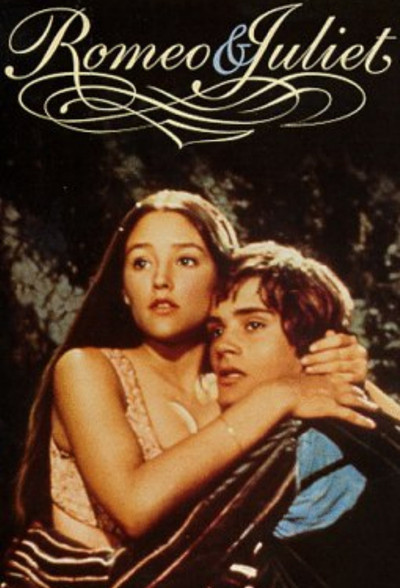
→ is a type of irony often used in literature. The author purposefully allows his characters to make a mistake, because they do not have information that the reader has. One such example of Dramatic Irony is in Romeo and Juliet, where Shakespeare stages the two lovers to meet at a masked ball. They do not know that they are from warring families, but the audience does, creating a sense of tension/suspense.
Aristotle's Poetics
Aristotle's Poetics is the earliest surviving work of dramatic theory and the first extant philosophical treatise to focus on literary theory.This has been the traditional view for centuries. However, recent work is now challenging whether Aristotle focuses on literary theory per se (given that not one poem exists in the treatise) or whether he focuses instead on dramatic musical theory that only has language as one of the elements.
In it, Aristotle offers an account of what he calls "poetry" (a term which in Greek literally means "making" and in this context includes drama – comedy, tragedy, and the satyr play – as well as lyric poetry and epic poetry). They are similar in the fact that they are all imitations but different in the three ways that Aristotle describes:
Differences in music rhythm, harmony, meter and melody.
Difference of goodness in the characters.
Difference in how the narrative is presented: telling a story or acting it out.
Form and content
Aristotle's work on aesthetics consists of the Poetics, Politics and Rhetoric. The Poetics is specifically concerned with drama. At some point, Aristotle's original work was divided in two, each "book" written on a separate roll of papyrus. Only the first part – that which focuses on tragedy and epic – survive. The lost second part addressed comedy. Some scholars speculate that the Tractatus coislinianus summarises the contents of the lost second book.
Form
The table of contents page of the Poetics found in Modern Library's Basic Works of Aristotle (2001) identifies five basic parts within it.
A. Preliminary discourse on tragedy, epic poetry, and comedy, as the chief forms of imitative poetry.
B. Definition of a tragedy, and the rules for its construction. Definition and analysis into qualitative parts.
C. Rules for the construction of a tragedy: Tragic pleasure, or catharsis experienced by fear and pity should be produced in the spectator. The characters must be four things: good, appropriate, realistic, and consistent. Discovery must occur within the plot. It is important for the poet to visualize all of the scenes when creating the plot. The poet should incorporate complication and dénouement within the story, as well as combine all of the elements of tragedy. The poet must express thought through the characters' words and actions, while paying close attention to diction and how a character's spoken words express a specific idea. Aristotle believed that all of these different elements had to be present in order for the poetry to be well-done. However, starting in 1948 with a Macedonian classicist, M.D. Petruševski, some scholars have rejected that Aristotle himself could have written the word katharsis in the definition of tragedy, because unlike all of the other words in the definition, it is not discussed either before or after the definition.
D. Possible criticisms of an epic or tragedy, and the answers to them.
E. Tragedy as artistically superior to epic poetry: Tragedy has everything that the epic has, even the epic meter being admissible. The reality of presentation is felt in the play as read, as well as in the play as acted. The tragic imitation requires less space for the attainment of its end. If it has more concentrated effect, it is more pleasurable than one with a large admixture of time to dilute it. There is less unity in the imitation of the epic poets (plurality of actions) and this is proved by the fact that an epic poem can supply enough material for several tragedies.
Matter
language, rhythm, and melody, for Aristotle, make up the matter of poetic creation. Where the epic poem makes use of language alone, the playing of the lyre involves rhythm and melody. Some poetic forms include a blending of all materials; for example, Greek tragic drama included a singing chorus, and so music and language were all part of the performance. These points also convey the standard view. Recent work, though, argues that translating rhuthmos here as "rhythm" is absurd: melody already has its own inherent musical rhythm, and the Greek can mean what Plato says it means in Laws II, 665a: "(the name of) ordered body movement," or dance. This correctly conveys what dramatic musical creation, the topic of the Poetics, in ancient Greece had: music, dance, and language. Also, the musical instrument cited in Ch 1 is not the lyre but the kithara, which was played in the drama while the kithara-player was dancing (in the chorus), even if that meant just walking in an appropriate way. Moreover, epic might have had only literary exponents, but as Plato's Ion and Aristotle's Ch 26 of the Poetics help prove, for Plato and Aristotle at least some epic rhapsodes used all three means of mimesis: language, dance (as pantomimic gesture), and music (if only by chanting the words).
Subjects
Also "agents" in some translations. Aristotle differentiates between tragedy and comedy throughout the work by distinguishing between the nature of the human characters that populate either form. Aristotle finds that tragedy treats of serious, important, and virtuous people. Comedy, on the other hand, treats of less virtuous people and focuses on human "weaknesses and foibles".Aristotle introduces here the influential tripartite division of characters in superior to the audience, inferior (χείρονας), or at the same level (τοιούτους).
Method
One may imitate the agents through use of a narrator throughout, or only occasionally (using direct speech in parts and a narrator in parts, as Homer does), or only through direct speech (without a narrator), using actors to speak the lines directly. This latter is the method of tragedy (and comedy): without use of any narrator.
Having examined briefly the field of "poetry" in general, Aristotle proceeds to his definition of tragedy:
Tragedy is a representation of a serious, complete action which has magnitude, in embellished speech, with each of its elements separately in the parts of the play and represented by people acting and not by narration, accomplishing by means of pity and terror the catharsis of such emotions.
By "embellished speech", I mean that which has rhythm and melody, i.e. song. By "with its elements separately", I mean that some parts of it are accomplished only by means of spoken verses, and others again by means of song .
He then identifies the "parts" of tragedy:
plot
Refers to the "structure of incidents" (actions). Key elements of the plot are reversals, recognition, and suffering. The best plot should be "complex" (i.e. involve a change of fortune). It should imitate actions arousing fear and pity. Thus it should proceed from good fortune to bad and involve a high degree of suffering for the protagonist, usually involving physical harm or death. However, new work also questions these traditional views: Aristotle says in three different places that tragedy can also go from misfortune to fortune, and the best type of tragedy in Ch 14 (like Cresphontes) ends happily and is explicitly ranked by him over Oedipus, which ends with great suffering.
Actions should be logical and follow naturally from actions that precede them. They will be more satisfying to the audience if they come about by surprise or seeming coincidence and are only afterward seen as plausible, even necessary.
When a character is unfortunate by reversal(s) of fortune (peripeteia known today in pop culture as a plot twist), at first he suffers (pathos) and then he can realize (anagnorisis) the cause of his misery or a way to be released from the misery.
character (ethos)
It is much better if a tragical accident happens to a hero because of a mistake he makes (hamartia) instead of things that might happen anyway. That is because the audience is more likely to be "moved" by it. A hero may have made it knowingly (in Medea) or unknowingly (Oedipus). A hero may leave a deed undone (due to timely discovery, knowledge present at the point of doing deed). Character is the moral or ethical character in tragic play. In a perfect tragedy, the character will support the plot, which means personal motivations will somehow connect parts of the cause-and-effect chain of actions producing pity and fear.
Main character should be:
good—Aristotle explains that audiences do not like, for example, villains "making fortune from misery" in the end. It might happen though, and might make the play interesting. Nevertheless, the moral is at stake here and morals are important to make people happy (people can, for example, see tragedy because they want to release their anger)
appropriate—if a character is supposed to be wise, it is unlikely he is young (supposing wisdom is gained with age)
consistent—if a person is a soldier, he is unlikely to be scared of blood (if this soldier is scared of blood it must be explained and play some role in the story to avoid confusing the audience); it is also "good" if a character doesn't change opinion "that much" if the play is not "driven" by who characters are, but by what they do (audience is confused in case of unexpected shifts in behaviour [and its reasons and morals] of characters)
"consistently inconsistent"—if a character always behaves foolishly it is strange if he suddenly becomes smart. In this case it would be good to explain such change, otherwise the audience may be confused. If character changes opinion a lot it should be clear he is a character who has this trait, not a real life person - this is also to avoid confusion
thought — reasoning of human characters can explain the characters or story background
diction Lexis is better translated according to some as "speech" or "language." Otherwise, the relevant necessary condition stemming from logos in the definition (language) has no followup: muthos (plot) could be done by dancers or pantomime artists, given Chs 1, 2 and 4, if the actions are structured (on stage, as drama was usually done), just like plot for us can be given in film or in a story-ballet with no words.
Refers to the quality of speech in tragedy. Speeches should reflect character, the moral qualities of those on the stage. The expression of the meaning of the words.
melody . "Melos" can also mean "music-dance" as some musicologists recognize, especially given that its primary meaning in ancient Greek is "limb" (an arm or a leg). This is arguably more sensible because then Aristotle is conveying what the chorus actually did.
The Chorus too should be regarded as one of the actors. It should be an integral part of the whole, and share in the action. Should be contributed to the unity of the plot. It is a very real factor in the pleasure of the drama.
spectacle
Refers to the visual apparatus of the play, including set, costumes and props (anything you can see). Aristotle calls spectacle the "least artistic" element of tragedy, and the "least connected with the work of the poet (playwright). For example: if the play has "beautiful" costumes and "bad" acting and "bad" story, there is "something wrong" with it. Even though that "beauty" may save the play it is "not a nice thing". Spectacle is like a suspenseful horror film.
Love is the Cause of Violence : Romeo and Juliet – Jeetendra Bhudial
Romeo and Juliet by Williams Shakespeare, depicts the downfall of two lovers whom fell in love at first sight and sacrificed their life to honor their love. Romeo, son of the Montague, and Juliet, daughter of the Capulet fell madly in love with each other, when Romeo attended a party held by Lord Capulet, to see Rosaline. After they had proposed their deep profound love to each other, their relationship escalated very quickly. They secretly got married, against their family rivalry, but soon after Romeo was involved in the murder of Juliet’s cousin Tybalt, he was exiled. The rumor of Juliet’s death caused him to take his life, not being able to bear the loss of his wife. When Juliet awoken from her deep sleep, the sight of Romero’s dead body beside her caused her to commit suicide as well, since she had nothing more to live for than her true love. Love is the main cause of violence in this play.
Love was the cause of violence when Romeo crashed the Capulet’s party. Romeo went to the party because he loves Rosaline. At the party, Romeo and Juliet saw each other and they fall in love at first sight. After Romeo was seen at the party, Tybalt was determined to kill him because of their family feud.
This, by his voice, should be a Montague. Fetch me my rapier boy. What dates the slave? Come hither covered with an antic face. To fleer and scorn at our solemnity? Now, by the stock and honor of my kin, To strike him dead I hold it not a sin.
Tybalt made reference to their family history, the reason for him wanting to kill Romeo to protect the honor of their family. Lord Capulet was fast to diffuse Tybalt’s anger and prevented him from causing any problems at his feast by the excuse that Romeo was a well known as normal, sweet, young man of Verona.
Content thee, gentle coz. Let him alone. He bears him like a portly gentleman, And, to say truth, Verona brags of him, To be a virtuous and well governed youth.
Afterwards, Tybalt seeks out Romeo and kills Mercutio from the desire for revenge over Romeo’s attendance at the party and Romeo kills Tybalt to avenge Mercutio. It can be observed that each of these central fights had only led unto more and more violence. Love is what brought Romeo and Juliet together but it causes violence and reasons for revenge, which compromises their relationship and ultimately pulled the lovers further apart from each other.

Love is the cause of violence because both Romeo and Juliet was so deeply in love that they would rather sacrifice their own lives than to be separated from each other. Their minds became plagued with the thoughts of suicide and a willingness to experience it. Romeo brandishes a knife in Friar Lawrence’s cell and threatens to kill himself after he has been banished from Verona, from his love Juliet, for killing Tybalt.
There is no world without Verona’s walls but purgatory;, torture, hell itself. Hence “banished” is banished from the world,” and death mistermed. Calling death “banished,” thou cutt’st my head off with a golden ax and smilest uon the stroke that murders me.
Juliet also pulls out a knife in order to take her own life in Friar Lawrence’s presence after she heard of her father’s plans to get her married to Paris. This act portrayed their dedication towards being loyal and faithful towards each other and shows how much they depended on each other’s companionship and love. After Lord Capulet decided that Juliet would marry Paris, Juliet says, “ If all ever fails, myself have power to die” . This also shows that’s she will take her life, rather than get married to Paris, also because she was already married to Romeo. She isn’t afraid to take her life in honor of up keeping her and her promise of love for Romeo. This continued unto its inevitable, tragic end when Romeo and Juliet chose death, in order to preserve their profound, admirable love. Since love cause violence, it can be seen as an amoral feeling, leading as much to destruction as to happiness.
 |
Although I joy in thee, I have no joy of this contract to-night. It is too rash, too unadvised, too sudden; Too like the lightning, which doth cease to be Ere one can say “It lightens.”
(116-20)
He Elaborated on the fact that Juliet was describing the speed at there romance was moving, but also explained that the lightning is a glorious break in the darkness of their lives. When the Nurse does not arrive fast enough with news about Romeo, Juliet laments that love heralds should be thoughts “which ten times faster glides than the sun’s beams” . Here, the heralds of love that will brings comforting news about her darling are compared to light and hope in her life. However, Romeo was the light in her life but they were still forced to part at dawn. Juliet proclaims that the night can
Take Romeo and cut him out into little stars,
And he will make the face of heaven so fine
That all thy world will be thy love with light and pay no attention to the garish sun.
This contrast of the light and speed of their love to darkness of the dawn foreshadowed that their love is going smooth at the moment but it will soon be faced with violence. Paul ended his argument by saying “If we all love at first sight, we only love the outer beauty of the person. We cannot truly love someone unless we understand their personality”. According to Paul, Romeo’s young immature love was only infatuation, which he did not understand and which caused him to make the wrong decisions and led to the downfall of their relationship.
As it can now be proven, love is the cause of violence in Romeo and Juliet. If Romeo’s love for Rosaline hadn’t led him to attend the Capulet’s Party uninvited, he wouldn’t have laid eyes upon Juliet and be involved in the battle of revenge with Tybalt. If Romeo and Juliet didn’t love each other as much as they did, they would’ve seen no reason to sacrifice their life when they saw that each other had died. Lastly, if Romeo and Juliet hadn’t perceived such a young, immature love driven by sexual feelings that escalated so quickly, they wouldn’t have went against their family’s traditions and rivalry in order to satisfy their own selfish desires. Love is the cause of violence.
------------------------------------------------------------------------------------------------------------
THE ENLIGHTENMENT (1650–1800)
 |
| The Enlightenment |
The Enlightenment was a sprawling intellectual, philosophical, cultural, and social movement that spread through England, France, Germany, and other parts of Europe during the 1700s. Enabled by the Scientific Revolution, which had begun as early as 1500, the Enlightenment represented about as big of a departure as possible from the Middle Ages—the period in European history lasting from roughly the fifth century to the fifteenth.
The millennium of the Middle Ages had been marked by unwavering religious devotion and unfathomable cruelty. Rarely before or after did the Church have as much power as it did during those thousand years. With the Holy Roman Empire as a foundation, missions such as the Crusades and Inquisition were conducted in part to find and persecute heretics, often with torture and death. Although standard at the time, such harsh injustices would eventually offend and scare Europeans into change. Science, though encouraged in the late Middle Ages as a form of piety and appreciation of God’s creation, was frequently regarded as heresy, and those who tried to explain miracles and other matters of faith faced harsh punishment. Society was highly hierarchical, with serfdom a widespread practice. There were no mandates regarding personal liberties or rights, and many Europeans feared religion—either at the hands of an unmerciful God or at the hands of the sometimes brutal Church itself.
The Scientific Revolution and the Enlightenment, however, opened a path for independent thought, and the fields of mathematics, astronomy, physics, politics, economics, philosophy, and medicine were drastically updated and expanded. The amount of new knowledge that emerged was staggering. Just as important was the enthusiasm with which people approached the Enlightenment: intellectual salons popped up in France, philosophical discussions were held, and the increasingly literate population read books and passed them around feverishly. The Enlightenment and all of the new knowledge thus permeated nearly every facet of civilized life. Not everyone participated, as many uneducated, rural citizens were unable to share in the Enlightenment during its course. But even their time would come, as the Enlightenment also prompted the beginning of the Industrial Revolution, which provided rural dwellers with jobs and new cities in which to live.
Whether considered from an intellectual, political, or social standpoint, the advancements of the Enlightenment transformed the Western world into an intelligent and self-aware civilization. Moreover, it directly inspired the creation of the world’s first great democracy, the United States of America. The new freedoms and ideas sometimes led to abuses—in particular, the descent of the French Revolution from a positive, productive coup into tyranny and bedlam. In response to the violence of the French Revolution, some Europeans began to blame the Enlightenment’s attacks on tradition and breakdown of norms for inducing the anarchy.
Indeed, it took time for people to overcome this opinion and appreciate the Enlightenment’s beneficial effect on their daily lives. But concrete, productive changes did, in fact, appear, under guises as varied as the ideas that inspired them. The effects of Enlightenment thought soon permeated both European and American life, from improved women’s rights to more efficient steam engines, from fairer judicial systems to increased educational opportunities, from revolutionary economic theories to a rich array of literature and music.
These ideas, works, and principles of the Enlightenment would continue to affect Europe and the rest of the Western world for decades and even centuries to come. Nearly every theory or fact that is held in modern science has a foundation in the Enlightenment; in fact, many remain just as they were established. Yet it is not simply the knowledge attained during the Enlightenment that makes the era so pivotal—it’s also the era’s groundbreaking and tenacious new approaches to investigation, reasoning, and problem solving that make it so important. Never before had people been so vocal about making a difference in the world; although some may have been persecuted for their new ideas, it nevertheless became indisputable that thought had the power to incite real change. Just like calculus or free trade, the very concept of freedom of expression had to come from somewhere, and it too had firm roots in the Enlightenment.

沒有留言:
張貼留言