 The twin masks of comedy and tragedy are used to represent the creative arts: particularly theater, film, and television. They have their roots in Greek theater, and represented a reflection of ancient Greek mythological tropes. Their endurance across the centuries reflects the power of drama and the twin themes of joy and despair which bracket the human condition. Though they can appear separately and indeed evolved as representations of different dramatic art forms, their appearance together holds far more symbolic importance.
Myths and Duality
Masks were originally thought to be the purveyance of Dionysus, Greek god of wine. His sphere of influence lent him a sense of duality: both the joy of drunken revelry and the darker emotions which wine can evoke. The specific comedy and tragedy masks were also associated with the Muses: nine goddesses who held sway over creative expression. The muse of tragedy, Melpomene, wore the sad mask, and the muse of comedy, Thalia, wore the happy mask.
 | |||
| Melpomene | This is Muse as Lost Mother, goddess of mourning and melancholy. She’s also got to be the muse of show-biz; big time! |
 |
| Thalia |
Greek Theater
It is believed that early Greek theater evolved out of festivals to Dionysus. The masks were frequently used during these festivals and subsequently incorporated into later theater. From a symbolic perspective, the masks freed their wearers from conformity and hidden desires, allowing people to express their true selves without fear. By donning them, the people honored Dionysus and the truths his influence revealed.
Purpose of Masks
From a more practical perspective, the masks helped audience members identify the emotions onstage. The mouths were enlarged in order to
(1)allow the actors to speak more easily, and
(2)the facial expressions were exaggerated so that those in the cheap seats could still understand what was going on.

Construction
Early comedy and tragedy masks were made from lightweight materials such as wood or pottery. They were intended to cover the entire face, with the help of a wig which would completely hide the actors' head. Women did not appear in Greek theater, so men would portray the women's parts using masks.
Genres
The twin genres represented by the masks are both intended to serve as a form of catharsis.
Comedy acts to deflate our preconceived notions and remind us how foolish we truly are, while tragedy permits us to grapple with dark realities such as death and failure in a safe context.
Though tragedy is today considered the more "artistic" genre, the Greeks actually revered(=respected) comedy more highly. The symbolic linking of the two with the masks emphasizes both their common roots as drama and the complex depth of human experience.
--------------------------------------------------------------------------------------------------------------
※ purveyance: to supply (as provisions) usually as a matter of business
※duality: the quality or state of having two parts
※revelry :noisy partying or merrymaking(gay or festive activity )
※sway:to move slowly from side to side
※freed : enjoying political independence or freedom from outside domination
※conformity : enjoying political independence or freedom from outside domination
※don: to put on (an article of clothing)
※lightweight :one of little consequence or ability ;weighing only a little or less than average
※deflate:to reduce in size, importance, or effectiveness
※grapple :a hand-to-hand struggle
----------------------------------------------------------------------------------------------------------

Mary Had a Little Lamb
Mary had a little lamb, little lamb,
little lamb, Mary had a little lamb
whose fleece was white as snow.
And everywhere that Mary went
Mary went, Mary went, everywhere
that Mary went
The lamb was sure to go.
He followed her to school one day,
school one day, school one day,
He followed her to school one day,
Which was against the rules,
It made the children laugh and play,
laugh and play, laugh and play,
It made the children laugh and play,
To see a lamb at school.
And so the teacher turned it out,
turned it out, turned it out,
And so the teacher turned it out,
But still it lingered near,
He waited patiently about,
ly about, ly about,
He waited patiently about,
Till Mary did appear.
"Why does the lamb love Mary so?"
love Mary so?" love Mary so?"
"Why does the lamb love Mary so?"
The eager children cried.
"Why, Mary loves the lamb, you know,"
lamb, you know," lamb, you know,"
"Why, Mary loves the lamb, you know,"
The teacher did reply.
--------------------------------------------------------------------------------------------------------------
The nursery rhyme was first published by the Boston publishing firm Marsh, Capen & Lyon, as an original poem by Sarah Josepha Hale on May 24, 1830, and was inspired by an actual incident.
As a young girl, Mary Sawyer (later Mary Tyler) kept a pet lamb that she took to school one day at the suggestion of her brother. A commotion naturally ensued. Mary recalled: "Visiting school that morning was a young man by the name of John Roulstone, a nephew of the Reverend Lemuel Capen, who was then settled in Sterling. It was the custom then for students to prepare for college with ministers, and for this purpose Roulstone was studying with his uncle. The young man was very much pleased with the incident of the lamb; and the next day he rode across the fields on horseback to the little old schoolhouse and handed me a slip of paper which had written upon it the three original stanzas of the poem..."

----------------------------------------------------------------------------------------------------------------------
in Just Related Poem Content Details
by e.e. cummings
spring when the world is mud-
luscious the little
lame balloonman
whistles far and wee
and eddieandbill come
running from marbles and
piracies and it's
spring
when the world is puddle-wonderful
the queer
old balloonman whistles---->Dionysus
far and wee
and bettyandisbel come dancing
from hop-scotch andand
it's
spring
and
the
goat-footed ---->Dionysus
balloonMan whistles
far
and
wee
 |
| hop-scotch |
 |
| jump-rope |
-------------------------------------------------------------------------------------------------------------------
The Thorn Birds

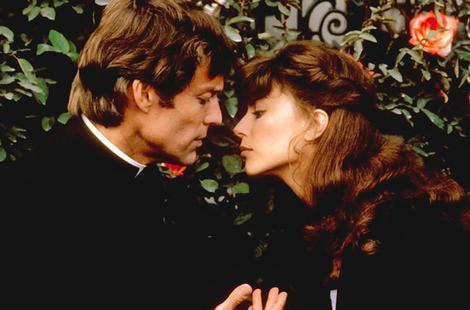
The Thorn Birds is an American television miniseries broadcast on ABC from March 27 to 30, 1983. It was directed by Daryl Duke and based on a novel by Colleen McCullough. The series was enormously successful and became the United States' second highest-rated miniseries of all time .

*The Thorn Birds Summary
The Thorn Birds is a sweeping love story set on Drogheda, a sheep station in the Australian Outback. At its heart is the ill-fated romance of beautiful Meggie Cleary and the handsome Roman Catholic priest, Father Ralph de Bricassart. Forced to choose between the woman he loves, and the Church he is sworn(swear) to, Father Ralph's ambitions win, and he stays with the Church, eventually becoming a Cardinal in Rome. De Bricassart never realizes that Meggie's bright, compliant young son, Dane, is his child, even when the boy comes to Rome to study for the priesthood. After Dane's tragic death, Meggie must choose between her own comfort, and the independence of her beautiful, willful daughter Justine, a talented actress. McCullough's tome, almost 700 pages in length, details the private lives of three generations of the Cleary clan over 55 years, and paints a convincing portrait of the trials and rewards of life in the Australian desert, and one woman's doomed love for an unavailable man.
Meggie Cleary is a beautiful, but lonely little girl of nine with red-gold hair, when the family moves to Drogheda. Meggie's brothers are all busy with the ranch, and she is soon forced to quit school to care of the younger children. Ralph de Bricassart, a handsome young Roman Catholic priest, befriends the child. As Meggie grows into a beautiful young woman, the two fall in love, culminating in a kiss after a ball, when Meggie is 16 years old. Mary Carson, the clan matriarch, is jealous and ends the romance by bequeathing the enormous sheep ranch to the Roman Catholic Church, ensuring that De Bricassart will be elevated to bishop, far from Drogheda.
Heartbroken, Meggie marries Luke O'Neill, a man who looks like De Bricassart, and moves to Queensland. Meggie's husband has no interest in living with her, and travels around the countryside cutting sugar cane, forcing Meggie to work as a servant for a Queensland couple, Anne and Ludwig Mueller. During one of Luke O'Neill's rare conjugal visits, they conceive their daughter, Justine. Exhausted, and realizing her marriage is not viable, Meggie retreats to the honeymoon resort of Matlock alone, to sort out her future. Anne Mueller sends de Bricassart to join her, and the two conceive a son during a week long idyll. Meggie immediately realizes she is pregnant, and contrives to have sex with her husband, so the child will not be nameless. De Bricassart is transferred to Rome, and does not learn that he has fathered a son, until the boy is grown.
Meggie returns to Drogheda, where Justine grows into a fey, willful young woman, and her brother Dane becomes a sunny child. When Dane decides to become a priest, he travels to Rome to study under De Bricassart's tutelage. Meggie refuses to attend young Dane's ordination in Rome, feeling the Church has taken back the little happiness she stole from it. Just weeks later, Dane dies in Greece, while rescuing a drowning woman. Heartbroken, Justine decides to leave her acting career and lover in London and return to Drogheda. In an act of unselfish love, Meggie insists Justine must continue her own life in Europe, rather than submerging herself in Drogheda, as generations of Cleary women before her have done. The title of the novel is drawn from the legend of a bird that sings just once in its life, more sweetly than any other, but only at the cost of great pain. The title symbolizes the tenderness of the brief, forbidden love affair between Meggie and Father Ralph, resulting in pain and tragedy.
---------------------------------------------------------------------------------------------------------------------
※titian:of a brownish-orange color
※auburn:of a reddish-brown color
※outback : isolated rural country especially of Australia
※deviations : departure from an established ideology or party line
※compliant :readily giving in to the command or authority of another
※sort out: to find an answer or solution for (something)
※idyll:a very happy,peaceful and simple situation or period of time ,especially in the countryside
※fey:mysterious and strange ,or trying to appear like this
※tutelage: an act or process of serving as guardian or protector
※ordination:the act or an instance of ordaining : the state of being ordained
 |
| ordination |
※bequeathing :to give or leave by will —used especially of personal property
※culminating: to bring to a head or to the highest point(climax)
※clan : a group of people tracing descent from a common ancestor
※tome: a large or scholarly book
※ Cardinal:
a high ecclesiastical official of the Roman Catholic Church who ranks next below the pope and is appointed by him to assist him as a member of the college of cardinals
----------------------------------------------------------------------------------------------------------------------
Samson Agonistes---by John Milton
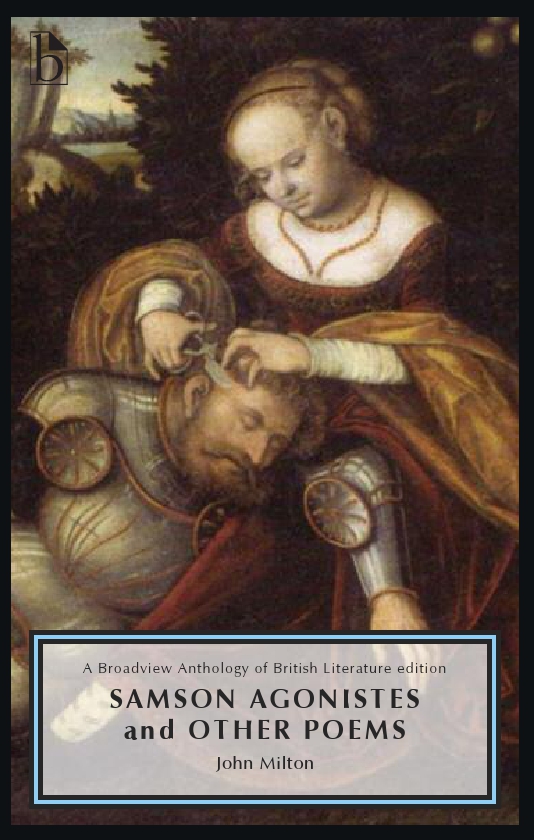

Samson Agonistes is a tragic closet drama by John Milton. It appeared with the publication of Milton's Paradise Regain'd in 1671, as the title page of that volume states: "Paradise Regained / A Poem / In IV Books / To Which Is Added / Samson Agonistes". It is generally thought that Samson Agonistes was begun around the same time as Paradise Regained but was completed after the larger work, possibly very close to the date of publishing, but there is no agreement on this.
----------------------------------------------------------------------------------------------------------------------
Samson Agonistes---by John Milton
Samson Agonistes is a tragic closet drama by John Milton. It appeared with the publication of Milton's Paradise Regain'd in 1671, as the title page of that volume states: "Paradise Regained / A Poem / In IV Books / To Which Is Added / Samson Agonistes". It is generally thought that Samson Agonistes was begun around the same time as Paradise Regained but was completed after the larger work, possibly very close to the date of publishing, but there is no agreement on this.
SAMSON AGONISTES SUMMARY

How It All Goes Down
It's a holiday for the Philistines when our poem opens, and this means that their Hebrew prisoner, Samson, gets a day off from the grueling labor he's usually forced to do. But he just can't relax. Instead, he obsesses over the various mistakes he's made in his life that have gotten him to this low point. Also, we learn that he's blind and that he feels he's betrayed his religion and his people.
In comes the Chorus, a group of his Hebrew friends. They try to be helpful, but they don't really have the lingo down and Samson seems to become more and more miserable. Then Manoa, Samson's father, shows up. He wants to negotiate with the Philistine authorities to secure Samson's release, but no dice. Samson feels that he deserves to be in prison. Hey, you can't stop a dad from trying—and off he goes to do just that.
Shortly after his dad departs, Samson's infamous Philistine ex-wife Dalila pays a visit. We learn that she's the reason Samson is in prison: she betrayed the secret that his amazing strength depends on his having a flowing, luscious locks. She told her people, they cut his hair, arrested him, blinded him... and here he is in prison. But she's here to apologize and explain.

Obviously, Samson is completely uninterested in hearing her excuses and says lots of insulting things to her. She leaves in a fury, with this parting shot: she's now a hero among her people.
Last but definitely not least is the Philistine giant Harapha, who says he's just come by to check out this famous Samson. He also says that he wishes Samson were in better physical condition so they could fight it out and see who's strongest. Samson is totally down, but Harapha won't fight a blind guy. They trash-talk for a while, and then Harapha leaves in a huff. Harumpha!
Just then, a messenger arrives with the order for Samson to come perform in a Philistine festival. Uh, no thanks, Samson says—and then thinks better of it, saying he has had this vague but powerful feeling that he's meant to go and perform some great deed. Off he trots, just missing his father, who's back with good news that he successfully bribed some Philistine leaders and can now take Samson home.
We're starting to get a bad feeling about this—and we're right. Just as the Chorus is about to celebrate this good news, they hear a horrible shriek. Another messenger runs in and reports that Samson has killed both himself and the entire Philistine elite by toppling the roof of the theater.
The Chorus and Manoa alternate between being super sad over the death of Samson and super happy that their enemy has been defeated. In the end, they go off to look for Samson's body and Manoa promises he's going to build Samson an awesome tomb. And thus ends Samson.


沒有留言:
張貼留言