2016年12月12日 星期一

Dramatic structure


Freytag's analysis

"Freytag's pyramid", symbolizing his theory of dramatic structure
According to Freytag, a drama is divided into five parts, or acts, which some refer to as a dramatic arc: exposition, rising action, climax, falling action, and dénouement. Freytag's Pyramid can help a writers organize their thoughts and ideas when describing the main problem of the drama, the rising action, the climax and the falling action.

Although Freytag's analysis of dramatic structure is based on five-act plays, it can be applied (sometimes in a modified manner) to short stories and novels as well, making dramatic structure a literary element. Nonetheless, the pyramid is not always easy to use, especially in modern plays such as Alfred Uhry's Driving Miss Daisy and Arthur Miller's The Crucible, which is actually divided into 25 scenes without concrete acts.

Exposition
The exposition is the portion of a story that introduces important background information to the audience; for example, information about the setting, events occurring before the main plot, characters' back stories, etc.
 Exposition can be conveyed through dialogues, flashbacks, character's thoughts, background details, in-universe media, or the narrator telling a back-story.

Rising action
In the rising action, a series of events build toward the point of greatest interest. The rising action of a story is the series of events that begin immediately after the exposition (introduction) of the story and builds up to the climax. These events are generally the most important parts of the story since the entire plot depends on them to set up the climax and ultimately the satisfactory resolution of the story itself.

Climax

The climax is the turning point, which changes the protagonist’s fate. if the story is a comedy and things were going bad for the protagonist, the plot will begin to unfold in his or her favor, often requiring the protagonist to draw on hidden inner strengths. If the story is a tragedy, the opposite state of affairs will ensue, with things going from good to bad for the protagonist, often revealing the protagonist's hidden weaknesses.

Falling action
During the falling action, the conflict between the protagonist and the antagonist unravels, with the protagonist winning or losing against the antagonist. The falling action may contain a moment of final suspense, in which the final outcome of the conflict is in doubt.

Dénouement; resolution, revelation, or catastrophe
「Denouement」的圖片搜尋結果
The dénouement comprises events from the end of the falling action to the actual ending scene of the drama or narrative. Conflicts are resolved, creating normality for the characters and a sense of catharsis, or release of tension and anxiety, for the reader. Etymologically, the French word dénouement is derived from the Old French word desnouer, "to untie", from nodus, Latin for "knot". It is the unraveling or untying of the complexities of a plot.[citation needed]

The comedy ends with a dénouement (=a conclusion), in which the protagonist is better off than at the story's outset. The tragedy ends with a catastrophe, in which the protagonist is worse off than at the beginning of the narrative. Exemplary of a comic dénouement is the final scene of Shakespeare’s comedy As You Like It, in which couples marry, an evildoer repents, two disguised characters are revealed for all to see, and a ruler is restored to power. In Shakespeare's tragedies, the dénouement is usually the death of one or more characters.
※antagonist:
Synonyms--> adversary, enemy, foe, hostile, opponent
※dénouement: the final outcome of the main dramatic complication in a literary work
------------------------------------------------------------------------------------------------------------------
In medias res
「In medias res」的圖片搜尋結果
A narrative work beginning in medias res (Classical Latin: [ɪn mɛdiaːs reːs], lit. "into the middle things") opens in the midst of action .Often, exposition is bypassed and filled in gradually, either through dialogue, flashbacks or description of past events.
For example, Hamlet begins after the death of Hamlet's father.
「Hamlet」的圖片搜尋結果
Hamlet 

Characters make reference to King Hamlet's death without the plot's first establishment of said fact. Since the play focuses on Hamlet and the revenge itself more so than the motivation, Shakespeare utilizes in medias res to bypass superfluous exposition.
「In medias res」的圖片搜尋結果

Works that employ in medias res often, though not always, subsequently use flashback and nonlinear narrative for exposition of earlier events in order to fill in the backstory. For example, in Homer's Odyssey, we first learn about Odysseus' journey when he is held captive on Calypso's island. We then find out, in Books IX through XII, that the greater part of Odysseus' journey precedes that moment in the narrative. On the other hand, Homer's Iliad has relatively few flashbacks, although it opens in the thick of the Trojan War.
-------------------------------------------------------------------------------------------------------
Photo by Johan Persson/Barbican Theatre
Benedict Cumberbatch as Hamlet at the Barbican Theatre.
Picture for a moment Hamlet, the melancholy prince of Denmark. Chances are, you’re imagining a dashing gentleman who looks like one of the many famous actors who’ve played him. Kenneth Branagh, say, or Laurence Olivier, or Jude Law or David Tennant. You might even picture Benedict Cumberbatch, who is drawing crowds to London to see him play the role. As the Guardian’s Michael Billington put it, “Cumberbatch has many of the qualities one looks for in a Hamlet. He has a lean, pensive countenance, a resonant voice, a gift for introspection.”

Billington is right: One does look for a Hamlet that is lean and pensive or, failing that, an action hero like Mel Gibson or Keanu Reeves, who both played the role in the 1990s. Cumberbatch combines aspects of both, having recently played both Sherlock Holmes and a genetically engineered supersoldier in Star Trek Into Darkness. 
「Star Trek Into Darkness.」的圖片搜尋結果
 Star Trek Into Darkness
「Sherlock Holmes」的圖片搜尋結果
BBC's Sherlock Holmes
But what if our mental image of Hamlet is wrong? What if the grieving, vengeful prince is actually fat? Just because you’ve never considered the possibility doesn’t mean that Shakespeare scholars haven’t argued about it, just one front in a centuries-old debate about how you determine meaning in Shakespeare’s plays.

The most straightforward way to figure out whether Hamlet is fat is to look at the text itself, in which Hamlet’s own mother calls him fat. During the play’s final sword duel, King Claudius turns to Queen Gertrude and says that Hamlet will win the duel, and Gertrude replies, “He’s fat and scant of breath,” before turning to Hamlet and telling him to “take my napkin, rub thy brows.”

Oh, great! you might think. Hamlet’s fat! Someone get Benedict Cumberbatch on the phone and tell him to start pounding the Big Macs. But just when you thought Shakespeare might, for once, make things easy, it turns out this line doesn’t prove anything. For one thing, there is no definitive text of Hamlet. Most versions of Hamlet we see or read are cobbled together from multiple editions, none of which had Shakespeare’s direct involvement. Gertrude’s line about her son being fat and scant of breath, for example, doesn’t appear in the earliest published edition of the play. We’re also not entirely sure where that first edition (called the “first quarto,” or “the bad Hamlet”) came from. It may be a first draft written by Shakespeare, or it could be pirated by an audience member furiously scribbling the play down as it was performed, or reconstructed by one of the actors who played a minor role in the show.

Maybe the line’s absence doesn’t matter. After all, the bad Hamlet is bad. It’s the version of Hamlet where the play’s most famous speech begins, “To be or not to be, aye, there’s the point.” But its absence in an early version could also demonstrate that Shakespeare added the line about Hamlet being “fat and scant of breath” later, as Richard Burbage, the actor playing Hamlet, like so many of us in our late 30s, got a little fat and scant of breath.

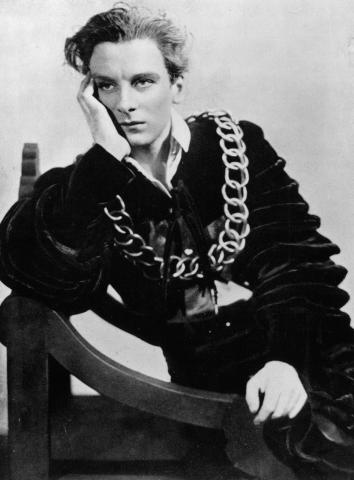
Sir Alec Guinness in the role of Hamlet in 1938.
Sir Alec Guinness as Hamlet in 1938.
Looking at Burbage—Shakespeare’s leading man and business partner—is another way we can determine if Hamlet is fat. The problem is that we have only one portrait of Burbage, and it dates from later in his life. (He doesn’t look that fat.) We know from a funeral elegy that Burbage’s “stature” was “small,” but although there’s a tradition that holds that he was somewhere between 14 and 17 stone (200-240 pounds), there’s no real evidence that this is true. Some scholars feel Julius Caesar might hold a clue; Burbage almost certainly played Brutus and Hamlet in the same year, and Caesar famously describes another character as too skinny to be trusted, implying perhaps that Brutus, on the other hand, isn’t skinny. At this point, though, we’re grasping at the leanest and hungriest of straws.

We can also look at the history of scholarship of Hamlet, as University of Wisconsin–Whitewater professor Elena Levy-Navarro does in this wonderful essay on the subject of Hamlet’s fatness. Levy-Navarro documents how, during the Victorian era—a time of fad diets and fitness crazes where one’s weight was mistaken for an indication of one’s moral fiber—a vocal minority of Shakespeare scholars, following the lead of Goethe, believed Hamlet was fat and that his fatness indicated weakness. A Victorian actor named E. Vale Blake declared in an 1880 article for Popular Science Monthly that Hamlet was “imprisoned in walls of adipose,” which, “essentially weakens and impedes … the will,” leading to his inability to, as Levy-Navarro puts it, “act decisively to avenge his father.”

How can anyone ever definitively say what the meaning of a word is in Shakespeare?
We also live in a time of fad diets and fitness crazes where one’s weight is mistaken for an indication of one’s moral fiber. Today, however, Hamlet’s heroism is taken for granted, and very few people believe that the text of Hamlet definitively shows he is fat. According to Levy-Navarro, some scholars claim “the word must be a printer’s error. Shakespeare must have written ‘hot,’ ‘faint,’ or ‘fey.’ ” Plumbing the depths of Shakespearean listservs, we find similar arguments. Harvard’s Eric Johnson-DeBaufre suggested, for example, that “ ‘fat’ is Shakespeare’s truncation of ‘fatigate,’ an adjective [meaning weary] in regular use during the period,” including in texts Shakespeare likely read. 

Even if it’s not a printer’s error or a truncation, fat might not mean what we think it means. In Elizabethan times, fat also meant sweaty. Since Gertrude offers Hamlet her napkin to wipe his face, perhaps context reveals that fat refers to his perspiring brow. This begs the question: How can anyone ever definitively say what the meaning of a word is in Shakespeare?

I decided to get to the bottom of this with some help from John-Paul Spiro, a Shakespearean scholar who teaches at Villanova. According to Spiro, investigating the meaning of specific words in Shakespeare is particularly fraught because Shakespeare was the Ornette Coleman of language. Beyond inventing more than 1,700 words, Shakespeare was “deliberately coming up with new meanings of words, and opening up new conceptual spaces,” Spiro said. The play Macbeth invents the contemporary definition of the word success, for example, and Shakespeare was the first person to use crown as a verb.

In order to figure out what fat means at this specific moment of Hamlet, then, we must look not only at how Elizabethans understood the term, but how his contemporaries used the term, how Shakespeare uses it in his plays in general, and how Shakespeare uses it in Hamlet. To the Elizabethans, fat could indeed mean sweaty, but “sweaty in the way fatty meat is sweaty when you cook it,” Spiro said. “Even in Elizabethan times, you would never say, ‘I went for a run, and now I’m fat.’ ”  
Robert Helpmann in title role of Hamlet in 1948.
Robert Helpmann as Hamlet in 1948.
But how did Shakespeare use it? At my urging, Spiro dug out his concordance and looked up every single usage of the word fat in Shakespeare. Of the 80 or so times Shakespeare uses fat, there are two usages outside of Hamlet where the Bard could be referring to sweat, but in general “ ‘stuffed’ is really what it’s used to mean,” Spiro told me. “Not just heavy. Overfull, teeming, something fatted and overfed, like livestock.”

It has other connotations as well, particularly around clumsiness. “If you have a fatted goose, it’s not going to walk well,” he says. “If you go back to references to Falstaff and a few other characters, there’s also a hint of calling someone effeminate. You’re clumsy the way a very pregnant woman is clumsy.”

In Hamlet itself, fat is used in ways that reference fullness and death. Fat appears first in Act I, when the Ghost tells Hamlet that if he is not interested in the Ghost’s story, he will be “duller … than the fat weed/ That roots itself in ease,” on the banks of the river Lethe, which cleansed newly dead souls of their memory in Greek myth. In the Queen’s bedchamber scene, Hamlet expresses his horror at his mother sleeping with her husband’s brother/murderer, ranting, “forgive me this my virtue/ For in the fatness of these pursy times/ Virtue itself of vice must pardon beg.”* Hamlet is declaring Denmark so stuffed with corruption that virtue is subservient to vice.
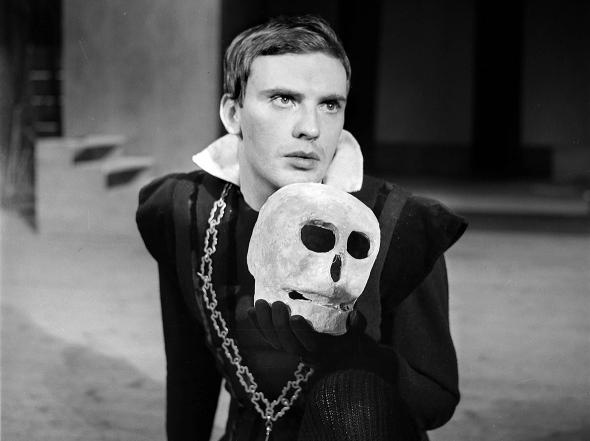
Jean-Louis Trintigant, French actor, in "Hamlet" by Shakespeare,
Jean-Louis Trintignant as Hamlet in January 1960.
The most explicit linkage of the word fat with both fullness and death comes in Act IV. When Claudius asks Hamlet—who has just murdered Polonius—where Polonius is, Hamlet responds that he is currently being eaten by worms, before saying:

Your worm is your only emperor for diet: we fat all creatures else to fat us, and we fat ourselves for maggots: your fat king and your lean beggar is but variable service, two dishes, but to one table: that's the end.
Here we see Shakespeare’s joy in multiple meanings on glorious display, using fat as both adjective and verb to describe a grimly comic circle of life in which everything and everyone is doomed and, in a worm’s belly, equal.  

Less than an hour later in stage time, Gertrude’s line about Hamlet’s fatness appears. According to Spiro, Hamlet’s use of the word in Act IV and Gertrude’s in Act V are connected. Claudius says that Hamlet will win, and Gertrude replies, in essence: “Look at him, he’s heavy, he’s not moving well, he’s already out of breath, he’s going to get carved up.” This line both recalls for the listener Hamlet’s speech about death and paves the way for Hamlet’s own demise. This link doesn’t work unless fat carries with it the connotations of overfull livestock about to die. 

So most of the evidence indicates that when Gertrude uses the word fat referencing Hamlet, she means, well, fat. There’s even additional—although, of course, ambiguous—evidence elsewhere in the play that Hamlet is fat. Ophelia, who gives the most detailed physical description of Hamlet in the play, talks about a sigh “shatter[ing] all his bulk” while he’s pretending to be mad. The word bulk is used elsewhere by Laertes when he describes Hamlet’s love for Ophelia waxing and waning like the moon in its bulk. Yet not only is Hamlet’s fatness a minority position within Shakespeare studies, but in the past 15 years, only two high-profile productions of Hamlet—one with Simon Russell Beale, the other Paul Giamatti—have starred actors who weren’t svelte. Perhaps the more pertinent question, then, is why we assume—or even need—Hamlet to be thin.  
Actor Jonathan Douglas.
Jonathan Douglas as Hamlet in 2004.
Shakespeare performance and study, of course, relies on tradition in the absence of primary sources. As Spiro put it in our interview, “Most of what we ‘know’ about Shakespeare comes from a couple of centuries after his death.” Our traditional idea of what Hamlet is like—thin, melancholy, a bit dashing, like an Oedipally fixated sexy Ph.D. candidate—is at this point bolstered by both centuries of questionable scholarship and a long line of memorable performances on stage, television, and film.

There’s a darker underbelly here, however. In the age of the gym body, we expect our heroes to look like this. Hamlet gets to romance (and doom) a young woman, and kill people, and escape from pirates, and think deep thoughts about life and death, and recite gorgeous poetry, and die in the midst of a spectacular sword duel. At no point in any of this is his fatness a source of pain or mocked the way that, say, Falstaff is mocked.  

These two problems reinforce each other. Tradition holds that Hamlet is lean and pensive; this jibes with our ideas of what a hero is and feels right; the tradition is then bolstered further. Reviews of both Beale’s and Giamatti’s performances, for example, tended to mention their unconventional bodies, with the Boston Globe’s Don Aucoin noting that Giamatti’s age, height and “paunch” made him “far from the heroically dashing Laurence Olivier model of the melancholy Dane.”* An interview from the time of Beale’s Hamlet reveals how the actor’s body shaped his career, confining him to both the stage and comic roles at the beginning of his career while contemporaries like Ralph Fiennes decamped for Hollywood. The only way to break this cycle is to create a counter-tradition of overweight Hamlets, opening up the role to actors we would not have normally considered. Some lean actors will be disappointed, I’m sure. But they can comfort themselves knowing that nearly every other leading role ever written was made for them.
※grasping at straws :
It means “looking for a way to do something which is actually hopeless and unattainable”. Like trying to stop yourself from falling by grabbing onto something that’s not going to hold your weight.

Often, it’s used to describe taking an untenable position in a discussion – trying to justify something by coming up with propositions that just don’t make sense.
※pensive :suggestive of sad thoughtfulness
※resonant :strongly affecting someone especially with a particular quality
※introspection:  an examination of one's own thoughts and feelings
※vengeful:seeking to avenge
※scant :barely or scarcely sufficient
※cobbled:  to mend or patch coarsely
※Plumb :a lead weight attached to a line and used to indicate a vertical direction
※truncation:to shorten by or as if by cutting off
※perspire:to emit matter through the skin(sweat)
※concordance :a state in which things agree and do not conflict with each other
※connotations :the suggesting of a meaning by a word apart from the thing it explicitly names or describes
※effeminate:having feminine qualities untypical of a man
※linkage :a part that connects two or more things
※bolstered :  a structural part designed to eliminate friction or provide support or bearing

-----------------------------------------------------------------------------------------------------
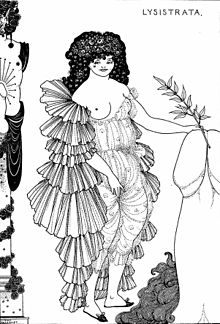
Lysistrata 
Lysistrata.jpg
Lysistrata ( "Army Disbander") is a comedy by Aristophanes. Originally performed in classical Athens in 411 BC, it is a comic account of one woman's extraordinary mission to end the Peloponnesian War. Lysistrata persuades the women of Greece to withhold sexual privileges from their husbands and lovers as a means of forcing the men to negotiate peace—a strategy, however, that inflames the battle between the sexes. The play is notable for being an early exposé of sexual relations in a male-dominated society. Additionally, its dramatic structure represents a shift from the conventions of Old Comedy, a trend typical of the author's career. It was produced in the same year as the Thesmophoriazusae, another play with a focus on gender-based issues, just two years after Athens' catastrophic defeat in the Sicilian Expedition.

2016年12月8日 星期四

Simon &Garfunkel
bridge over troubled water
lyrics
「bridge over troubled water」的圖片搜尋結果
When you're weary, feeling small,
When tears are in your eyes
I will dry them all
I'm on your side
When times get rough
And friends just can't be found
Like a bridge over troubled water
I will lay me down
Like a bridge over troubled water
I will lay me down

When you're down and out
When you're on the street
When evening falls so hard
I will comfort you
I'll take your part
When darkness comes
And pain is all around
Like a bridge over troubled water
I will lay me down
Like a bridge over troubled water
I will lay me down

Sail on, silvergirl
Sail on by
Your time has come to shine
All your dreams are on their way
See how they shine
If you need a friend
I'm sailing right behind
Like a bridge over troubled water
I will ease your mind
Like a bridge over troubled water
I will ease your mind

Meaning
It means a place of safety, comfort and security. When waters are troubled (turbulent, fast-flowing and possibly dangerous) a bridge provides a place away from the drama and confusion.

The classic 1970 song of that name, by Simon and Garfunkel, is about providing comfort to a friend: being that bridge over troubled water when the other person needs to be lifted up, away from their troubles.
「bestie friends」的圖片搜尋結果

--------------------------------------------------------------------------------------------------------------
※Sail on, sail on by, silver girl?
「silvergirl hair」的圖片搜尋結果
silver girl

Explanation:
(1)"The line "Sail on, silver girl" is often reputed to refer to a needle (meaning the song is about heroin) but it actually refers to Simon's girlfriend (and later wife) Peggy Harper who found a few gray hairs and was upset. The lyric was meant as a joke - Simon calling her "Silver Girl" because of her hair."
(2)silver girl might also mean the moon.if you listen to the lyrics with this context in mind , all the paragraph makes sense
--------------------------- ---------------------------------------------------------------------------------------
相關圖片
Looking up a dictionary~~
having the simplicity, charm, serenity, or other characteristics generally attributed to rural areas:
pastoral scenery; the pastoral life.<----->
rustic:of, relating to, or living in the country, as distinguished from towns or cities; rural.
※rural and rustic---What's the difference?
*As adjectives the difference between rural and rustic is that rural is pertaining to less-populated, non-urban areas while rustic is country-styled or pastoral; rural.


*As a noun rustic is  a (sometimes unsophisticated) person from a rural area.
-------------------------------------------------------------------------------------------------------------
※The words that i like and want to learn:
deleterious<----->delegate
obliterate:to remove from existence; destroy utterly all trace, indication, or significance of
ferment : cause to undergo fermentation
virile :


「virile」的圖片搜尋結果相關圖片
virile
Having or exhibiting masculine energy, forcefulness, or strength in a marked degree.
 having the nature, properties, or qualities of an adult male; specifically :  capable of functioning as a male in copulation
congenial(<--->congenital)
existing or associated together harmoniously
abstemious:  
marked by restraint especially in the consumption of food or alcohol; also :  reflecting such restraint <an abstemious diet>
相關圖片


※Talking about "the person you hate":
foe:an enemy in war
enemy :one that takes an opposite position (as in a debate, contest, or conflict)
rival:  one of two or more striving to reach or obtain something that only one can possess
nemesis:a formidable and usually victorious rival or opponent


※The difference between "fable","parable","allegory"
*explanation 1
Allegory: A story in which ideas are symbolized as people.
Parable: A short story designed to teach a moral or religious lesson.
Fable: A short story in which animals or objects speaks a story, to teach a moral or religious lesson.(anthropomorph: a stylized human figure (as in prehistoric art))
「anthropomorphic」的圖片搜尋結果
anthropomorphic:described or thought of as having a human form or human attributes 
---------------------------------------------------------------------------------------------------------------
Scarborough Fair

Are you going to Scarborough Fair?
Parsley, sage, rosemary, and thyme;
Remember me to the one who lives there,
For once she was a true love of mine.

Tell her to make me a cambric shirt,
Parsley, sage, rosemary, and thyme;
Without any seam or needlework,
Then she shall be a true love of mine.

Tell her to wash it in yonder well,
Parsley, sage, rosemary, and thyme;
Where never sprung water or rain ever fell,
And she shall be a true lover of mine.

Tell her to dry it on yonder thorn,
Parsley, sage, rosemary, and thyme;
Which never bore blossom since Adam was born,
Then she shall be a true lover of mine.

※cambric:  a cotton fabric that resembles cambric

「cambric shirt ancient」的圖片搜尋結果
cambric shirt

※yonder: at or in that indicated more or less distant place usually within sight
「yonder」的圖片搜尋結果
yonder mountain--a Cherokee legend(one illustrated book)

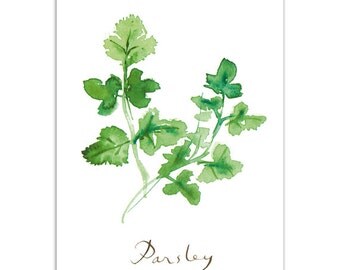
「parsley watercolor」的圖片搜尋結果
parsley(comfort)
※parsley: 
 a European biennial herb of the carrot family widely grown for its finely dissected curly or flat leaves which are used as an herb or garnish; also :  the leaves
※rosemary:
 a fragrant shrubby Mediterranean mint having grayish-green needlelike leaves used as a seasoning
「rosemary watercolor」的圖片搜尋結果
rosemary(love)
※thyme:  any of a genus of Eurasian mints with small pungent aromatic leaves; especially a Mediterranean garden herb.
相關圖片
thyme(courage)
※sage: European perennial mint  with grayish-green aromatic leaves used especially in flavoring meats.
「sage watercolor」的圖片搜尋結果
sage(strength)
※garnish:to add decorative or savory touches to (food or drink)
※perennial:  present at all seasons of the year
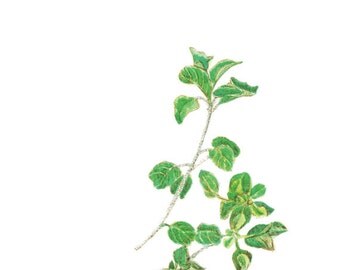
※shrubby :consisting of or covered with shrubs
「shrubby watercolor」的圖片搜尋結果
shrubby

The History and Romance Behind Scarborough Fair


“Are you going to Scarborough Fair?
Parsley, sage, rosemary, and thyme
Remember me to one who lives there
She once was a true love of mine.” ~Scarborough Fair / Canticle by Simon & Garfunkel, based on an old English ballad, possibly based on an even older Scottish one. (Image source and link given below)

*I always wondered about this song and after much research have discovered that the meaning of the song and refrain has been much debated.  One theory from this herb lore site:

“The herbs parsley, sage, rosemary and thyme, recurring in the second line of each stanza, make up for a key motive in the song. Although meaningless to most people today, these herbs spoke to the imagination of medieval people as much as red roses do to us today. Without any connotation necessary, they symbolize virtues the singer wishes his true love and himself to have, in order to make it possible for her to come back again.”

A theory from this site: “The four herbs highlighted in the song symbolize a complex love riddle compiled by a spurned lover. The “one who lives there” was supposed to figure it out. In the days of Scarborough Fair, herbs were prized primarily for medicinal value as well as their ability to ward off foul odors and dye cloth. Many herbs were assigned multiple meanings related to the various ills or problems they were supposed to cure. The love riddle in this case was designed to woo the lady back through the hidden meanings of parsley, sage, rosemary and thyme.”

I have no personal theory but found all of this interesting.  According to Wikipedia: The ballad tells the tale of a young man, who tells the listener to ask his former lover to perform for him a series of impossible tasks, such as making him a shirt without a seam and then washing it in a dry well, adding that if she completes these tasks he will take her back. Often the song is sung as a duet, with the woman then giving her lover a series of equally impossible tasks, promising to give him his seamless shirt once he has finished.
相關圖片
As the versions of the ballad known under the title “Scarborough Fair” are usually limited to the exchange of these impossible tasks, many suggestions concerning the plot have been proposed, including the hypothesis that it is a song about the Plague. In fact, “Scarborough Fair” appears to derive from an older (and now obscure) Scottish ballad, The Elfin Knight (Child Ballad #2) which has been traced at least as far back as 1670 and may well be earlier. In this ballad, an elf threatens to abduct a young woman to be his lover unless she can perform an impossible task .

As the song spread, it was adapted, modified, and rewritten to the point that dozens of versions existed by the end of the 18th century, although only a few are typically sung nowadays. The references to “Scarborough Fair” and the refrain “parsley, sage, rosemary and thyme” date to nineteenth century versions, and the refrain may have been borrowed from the ballad Riddles Wisely Expounded, (Child Ballad ), which has a similar plot.

MEANING OF THE REFRAIN:
Much thought has gone into attempts to explain the refrain “parsley, sage, rosemary and thyme“, although, as this is found only in relatively recent versions, there may not be much to explain. The oldest versions of “The Elfin Knight” (circa 1650) contain the refrain “my plaid away, my plaid away, the wind shall not blow my plaid away” (or variations thereof), which may reflect the original emphasis on the lady’s chastity. Slightly younger versions often contain one of a group of related refrains:

Sober and grave grows merry in time
Every rose grows merry with time
There’s never a rose grows fairer with time
These are usually paired with “Once she was a true love of mine” or some variant.
“Parsley, sage, rosemary and thyme” may simply be an alternate rhyming refrain to the original. Folksong scholar Märta Ramsten states that folksong refrains containing enumerations of herbs — spices and medical herbs — occur in many languages.  Parsley, sage, rosemary and thyme may also refer to the pagan belief, that when together, can be a love charm.


Scarborough is a small town on the coast of England. “Scarborough Fair” was a popular gathering in Medieval times, attracting traders and entertainers from all over the country. The fair lasted 45 days and started every August 15th. In the 1600s, mineral waters were found in Scarborough and it became a resort town. Today, Scarborough is a quiet town with a rich history.

In Medieval England, this became a popular folk song as Bards would sing it when they traveled from town to town. The author of the song is unknown, and many different versions exist. The traditional version has many more lyrics.

The lyrics are about a man trying to attain his true love. In Medieval times, the herbs mentioned in the song represented virtues that were important to the lyrics.
★ Parsley was comfort, sage was strength, rosemary was love, and thyme was courage.

※seam: the stitching used in such a joining
※hypothesis:an assumption or concession made for the sake of argument
※connotation:
the suggesting of a meaning by a word apart from the thing it explicitly names or describes
※ ward off:to avoid being hit by (something)
※enumerations :to ascertain the number of
※pagan :one who has little or no religion and who delights in sensual pleasures and material goods ; an irreligious or hedonistic person
-------------------------------------------------------------------------------------------------------------------
☆discreet =prudent=cautious
☆rustic =pastoral
innocuous=innocent
gaudy=showy
         =splashy
「ostentatious」的圖片搜尋結果
learn ostentatious from this sentence↑
        =ostentatious
        =garish(excessively or disturbingly vivid <garish colors>)
「gaudy」的圖片搜尋結果
gaudy
------------------------------------------------------------------------------------------------------------------
specious:having a false look of truth or genuineness
「specious」的圖片搜尋結果
learn "specious" from this↑ dialogue
「it's your attitude not your aptitude that determines your altitude」的圖片搜尋結果
attitude aptitude altitude
attitude:a mental position with regard to a fact or state
aptitude:a natural ability
altitude:a high level (as of quality or feeling)
------------------------------------------------------------------------------------------------------------------
Francis of Assisi


「francis of assisi」的圖片搜尋結果
St. Francis of Assisi abandoned a life of luxury for a life devoted to Christianity after reportedly hearing the voice of God, who commanded him to rebuild the Christian church and live in poverty. He is the patron saint for ecologists.

Synopsis

Born in Italy circa 1181, St. Francis of Assisi was renowned for drinking and partying in his youth. After fighting in a battle between Assisi and Perugia, Francis was captured and imprisoned for ransom. He spent nearly a year in prison—awaiting his father's payment—and, according to legend, began receiving visions from God. After his release from prison, Francis heard the voice of Christ, who told him to repair the Christian Church and live a life of poverty. Consequently, he abandoned his life of luxury and became a devotee of the faith, his reputation spreading all over the Christian world. Later in life, Francis reportedly received a vision that left him with the stigmata of Christ—marks resembling the wounds Jesus Christ suffered when he was crucified—making Francis the first person to receive such holy wounds. He was canonized as a saint on July 16, 1228. Today, St. Francis of Assisi has had a lasting resonance with millions of followers across the globe.

Early Life of Luxury

Born circa 1181, in Assisi, duchy of Spoleto, Italy, St. Francis of Assisi, though revered today, began his life as a confirmed sinner. His father was a wealthy cloth merchant who owned farmland around Assisi, and his mother was a beautiful Frenchwoman. Francis was not in want during his youth; he was spoiled, indulging himself with fine food, wine, and wild celebrations. By age 14, he had left school and become known as a rebellious teenager who frequently drank, partied and broke the city curfew. He was also known for his charm and vanity.

In these privileged surroundings, Francis of Assisi learned the skills of archery, wrestling and horsemanship. He was expected to follow his fat her into the family textile business but was bored by the prospect of life in the cloth trade. Instead of planning a future as a merchant, he began daydreaming of a future as a knight; knights were Medieval action heroes, and if Francis had any ambition, it was to be a war hero like them. It wouldn't be long before the opportunity for warfare beckoned.

In 1202, war broke between Assisi and Perugia, and Francis eagerly took his place with the cavalry. Little did he know at the time, his experience with war would change him forever.


War and Imprisonment

Francis and the men of Assisi came under heavy attack, and in the face of superior numbers, they took flight. The whole battlefield was soon covered with the bodies of butchered, mutilated men, screaming in agony. Most of the surviving Assisi troops were immediately put to death.

Unskilled and with no combat experience, Francis was quickly captured by enemy soldiers. Dressed like an aristocrat and wearing expensive new armor, he was considered worthy of a decent ransom, and the soldiers decided to spare his life. He and the other wealthy troops were taken as prisoners, led off to a dank underground cell. Francis would spend nearly a year in such miserable conditions—awaiting his father's payment—during which time he may well have contracted a serious disease. Also during this time, he would later report, he began to receive visions from God.()

After the War

After a year of negotiations, Francis's ransom was accepted, and he was released from prison in 1203. When he came back to Assisi, however, Francis was a very different man. Upon his return, he was dangerously sick in both mind and body—a battle-fatigued casualty of war.

One day, as legend has it, while riding on a horse in the local countryside, Francis encountered a leper. Prior to the war, Francis would have run from the leper, but on this occasion, his behavior was very different. Viewing the leper as a symbol of moral conscience—or as Jesus incognito, according to some religious scholars—he embraced and kissed him, later describing the experience as a feeling of sweetness in his mouth. After this incident, Francis felt an indescribable freedom. His earlier lifestyle had lost all of its appeal.

Subsequently, Francis, now in his early 20s, began turning his focus toward God. Instead of working, he spent an ever-increasing amount of time at a remote mountain hideaway as well as in old, quiet churches around Assisi, praying, looking for answers, and helping nurse lepers. During this time, while praying before an old Byzantine crucifix at the church of San Damiano, Francis reportedly heard the voice of Christ, who told him to rebuild the Christian Church and to live a life of extreme poverty. Francis obeyed and devoted himself to Christianity. He began preaching around Assisi and was soon joined by 12 loyal followers.

Some regarded Francis as a madman or a fool, but others viewed him as one of the greatest examples of how to live the Christian ideal since Jesus Christ himself. Whether he was really touched by God, or simply a man misinterpreting hallucinations brought on by mental illness and/or poor health, Francis of Assisi quickly became well-known throughout the Christian world.

Devotion to Christianity

After his epiphany at the church of San Damiano, Francis experienced another defining moment in his life. In order to raise money to rebuild the Christian church, he sold a bolt of cloth from his father's shop, along with his horse. His father became furious upon learning of his son's actions and subsequently dragged Francis before the local bishop. The bishop told Francis to return his father's money, to which his reaction was extraordinary: He stripped off his clothes, and along with them, returned the money back to his father, declaring that God was now the only father he recognized. This event is credited as Francis's final conversion, and there is no indication that Francis and his father ever spoke again thereafter.

The bishop gave Francis a rough tunic, and dressed in these new humble clothes, Francis left Assisi. Unluckily for him, the first people he met on the road were a group of dangerous thieves, who beat him badly. Despite his wounds, Francis was elated. From now on, he would live according to the Gospel.

Francis's embrace of Christ-like poverty was a radical notion at the time. The Christian church was tremendously rich, much like the people heading it, which concerned Francis and many others, who felt that the long-held apostolic ideals had eroded. Francis set out on a mission to restore Jesus Christ's own, original values to the now-decadent church. With his incredible charisma, he drew thousands of followers to him. They listened to Francis's sermons and joined in his way of life; his followers became known as Franciscan friars.

Continuously pushing himself in the quest for spiritual perfection, Francis was soon preaching in up to five villages per day, teaching a new kind of emotional and personal Christian religion that everyday people could understand. He even went so far as to preach to animals, which garnered criticism from some and earned him the nickname "God's fool." But Francis's message was spread far and wide, and thousands of people were captivated by what they heard.

In 1224, Francis reportedly received a vision that left him with the stigmata of Christ—marks resembling the wounds Jesus Christ suffered when he was crucified, through his hands and the gaping lance wound in his side. This made Francis the first person to receive the holy wounds of the stigmata. They would remain visible for the rest of his life. Because of his earlier work treating lepers, some believe that the wounds were actually symptoms of leprosy.

Death and Legacy

As Francis approached his death, many predicted that he was a saint in the making. When his health began to decline more rapidly, Francis went home. Knights were sent from Assisi to guard him and to make sure that no one from neighboring towns would carry him off (the body of a saint was viewed, at the time, as an extremely valuable relic that would bring, among many things, glory to the town where it rested).

Francis of Assisi died on October 3, 1226, at the age of 44, in Assisi, Italy. Today, Francis has a lasting resonance with millions of followers across the globe. He was canonized as a saint just two years after his death, on July 16, 1228, by his former protector, Pope Gregory IX. Today, St. Francis of Assisi is the patron saint for ecologists—a title honoring his boundless love for animals and nature.


※archery:the art, practice, or skill of shooting with bow and arrow
相關圖片
archery
※vanity:When you are too interested in your appearance or achievement.
※Calvary: an open-air representation of the crucifixion of Jesus
※prospect:(1) :  an extensive view (2) :  a mental consideration 
※butcher(verb.):one that kills ruthlessly or brutally
※mutilate: to cause severe damage to (the body of a person or animal)
※hallucination:an unfounded or mistaken impression or notion
※duchy:the area of land owned or ruled by a duke pr duchess.
※leprosy:an infectious disease that damages a person's nerves and skin
↑leper:(1)a person  who has leprosy
        (2)a person who is strongly disliked and avoided by other people because of something bad that              he or she has done.
※stigmata:marks that appear on a person's body in the same places as those made on Jesus Christ's body when he was fastened to  a cross with nails.
※incognito:avoiding being recognized ,by changing your name or appearance
※aristocrat :a person of high social rank;a member of the aristocracy
※textile :a cloth made by hand or machine
※curfew:a rule that everyone must stay at home between particular time,usually at night ,especially during a war or a period of political trouble.


2016年12月2日 星期五

Reading novels~~~

some beautifully written book
「.Shiver by Maggie Stiefvater」的圖片搜尋結果
1.Shiver  by Maggie Stiefvater
「.Shiver by Maggie Stiefvater」的圖片搜尋結果
So ...I started reading this book not so long ago.Though I've just finished very little amount of this amazingly written novel,I make a big decision...I am going to share Beautifully Written Sentence &New Learned Words from this book to all of you~

So Let's get start it~
Excellent sentences
1.(P.178)Grace made a soft voice of disappointment  as i disentangled my legs from hers,aching with wanting more.I shifted to lie next to her,my fingers still caught in her hair.We listened to the wolves howling outside the window ,the ones who hadn't change.Or who would never change again.And we buried our heads against each other so we couldn't hear anything but the racing of our hearts.

2 P.358
I tried it again,carefully , a fragile fawn on my new legs,and it gave underneath me.I crashed sideways arms wheeling (*wheedle),feeling for some kind of  of support.My palms raked across   legion of spiked instruments of torture hung on the walls.I had no idea what the were--cold ,metallic,dirty.
3.P.434
When she blinked,three shining tears left crystal tracks on her cheeks.

4 P.167 I rubbed the crease between his eyebrows.
(※crease: a line, mark, or ridge made by or as if by folding a pliable substance)


---------------------------------------------------------------------------------------------
New  learned words

1.peppermint

相關圖片
 a pungent and aromatic mint (Mentha piperita) with dark green lanceolate leaves and whorls of small pink flowers in spikes
「moonlit」的圖片搜尋結果
lighted by the moon
※pungent: having a stiff and sharp point
※aromatic: having a strong smell
OR  having a distinctive quality

※whorl:  a drum-shaped section on the lower part of a spindle in spinning or weaving machinery serving as a pulley for the tape drive that rotates the spindle

※spike:  an elongated inflorescence similar to a raceme but having the flowers sessile on the main axis

※moonlit:lighted by the moon


See it from this sentence-->
P.326  She didn't look afraid of me.She looked beautiful,moonlit,tempting,smelling of peppermint and soap and skin.
2.wheedle: to influence or entice by soft words or flattery
※cajole, coax, soft-soap, blandish, wheedle mean to influence or persuade by pleasing words or actions. 
3. wince: to shrink back involuntarily (as from pain)
4.whine: to utter a high-pitched plaintive or distressed cry
-----------------------------------------------------------------------------------------------------------------------
The raven boys by Maggie stiefvater「the raven boys」的圖片搜尋結果

※Sentences that i liked:
P.284 When there is a god,there's always a legion of  of devil.
The sticky note in her backpack felt like a burning confession.
Her hands were cupped around the mug.
My words are unerring tools of destruction,and I’ve come unequipped with the ability to disarm them.
P.278
His(Noah) skin was pale as parchment and his eyes were shadowed and unspecific ,as they always were after dark.There was the ubiquitous smudge on his face,only now,it looked like dirt .or blood ,or possibly like a hollow ,his bone crashed beneath his skin.
※parchment:the skin of a sheep or goat prepared for writing on
「parchment」的圖片搜尋結果
parchment
※ubiquitous: seeming to be seen everywhere
※smudge: to rub, daub, or wipe in a smeary manner
P.279
Reality was a bridge breaking down beneath Adam.
P.400
In this vision,the night smeared jeweled reflections across wet,steaming pavement,spotlight turning from green to red.The Camaro sat at a curb,Blue in the driver's seat. Everything  is soaked in the smell of the gasoline.She caught a glimpse of a collared shirt in the passenger seat;this was Gansey.
He leaned across the gearshift toward her ,pressing fingers to the place her collarbone was exposed.His breath is hot on her neck.

「the raven boys」的圖片搜尋結果

※words that i learned:
noncommittal:giving no clear indication of attitude or feeling
tuft(is used to describe hair):
a small cluster of elongated flexible outgrowths attached or close together at the base and free at the opposite ends; especially :  a growing bunch of grasses or close-set plants
oppressive:unreasonably burdensome or severe
clutch :
to grasp or hold with or as if with the hand or claws usually strongly, tightly, or suddenly
pristine: belonging to the earliest period or state 
exempt: free or released from some liability or requirement to which others are subject
nautical:
of, relating to, or associated with seamen, navigation, or ships
muffle:to wrap or pad with something to dull the sound 
clammy:being damp, soft, sticky, and usually cool
martyrdom:when someone suffers or is killed for their beliefs


2016年11月24日 星期四

11/24 Note from class

 comedy and tragedy


「drama tragedy comedy mask」的圖片搜尋結果The twin masks of comedy and tragedy are used to represent the creative arts: particularly theater, film, and television. They have their roots in Greek theater, and represented a reflection of ancient Greek mythological tropes. Their endurance across the centuries reflects the power of drama and the twin themes of joy and despair which bracket the human condition. Though they can appear separately and indeed evolved as representations of different dramatic art forms, their appearance together holds far more symbolic importance.


Myths and Duality
Masks were originally thought to be the purveyance of Dionysus, Greek god of wine. His sphere of influence lent him a sense of duality: both the joy of drunken revelry and the darker emotions which wine can evoke. The specific comedy and tragedy masks were also associated with the Muses: nine goddesses who held sway over creative expression. The muse of tragedy, Melpomene, wore the sad mask, and the muse of comedy, Thalia, wore the happy mask.
「Melpomene」的圖片搜尋結果
MelpomeneThis is Muse as Lost Mother, goddess of mourning and melancholy. She’s also got to be the muse of show-biz; big time!

「Thalia muse」的圖片搜尋結果
Thalia 

Greek Theater


It is believed that early Greek theater evolved out of festivals to Dionysus. The masks were frequently used during these festivals and subsequently incorporated into later theater. From a symbolic perspective, the masks freed their wearers from conformity and hidden desires, allowing people to express their true selves without fear. By donning them, the people honored Dionysus and the truths his influence revealed.

Purpose of Masks
From a more practical perspective, the masks helped audience members identify the emotions onstage. The mouths were enlarged in order to
(1)allow the actors to speak more easily, and
(2)the facial expressions were exaggerated so that those in the cheap seats could still understand what was going on.
「spectator in greek theatre」的圖片搜尋結果
Construction
Early comedy and tragedy masks were made from lightweight materials such as wood or pottery. They were intended to cover the entire face, with the help of a wig which would completely hide the actors' head. Women did not appear in Greek theater, so men would portray the women's parts using masks.

Genres
The twin genres represented by the masks are both intended to serve as a form of catharsis.
Comedy acts to deflate our preconceived notions and remind us how foolish we truly are, while tragedy permits us to grapple with dark realities such as death and failure in a safe context.
Though tragedy is today considered the more "artistic" genre, the Greeks actually revered(=respected) comedy more highly. The symbolic linking of the two with the masks emphasizes both their common roots as drama and the complex depth of human experience.

--------------------------------------------------------------------------------------------------------------
※ purveyance: to supply (as provisions) usually as a matter of business
※duality:  the quality or state of having two parts
※revelry :noisy partying or merrymaking(gay or festive activity )
※sway:to move slowly from side to side
※freed : enjoying political independence or freedom from outside domination
※conformity :  enjoying political independence or freedom from outside domination
※don: to put on (an article of clothing)
※lightweight :one of little consequence or ability ;weighing only a little or less than average
※deflate:to reduce in size, importance, or effectiveness
※grapple :a hand-to-hand struggle
----------------------------------------------------------------------------------------------------------
「Mary Had a Little Lamb」的圖片搜尋結果

Mary Had a Little Lamb
Mary had a little lamb, little lamb,
little lamb, Mary had a little lamb
whose fleece was white as snow.
And everywhere that Mary went
Mary went, Mary went, everywhere
that Mary went
The lamb was sure to go.

He followed her to school one day,
school one day, school one day,
He followed her to school one day,
Which was against the rules,
It made the children laugh and play,
laugh and play, laugh and play,
It made the children laugh and play,
To see a lamb at school.

And so the teacher turned it out,
turned it out, turned it out,
And so the teacher turned it out,
But still it lingered near,
He waited patiently about,
ly about, ly about,
He waited patiently about,
Till Mary did appear.

"Why does the lamb love Mary so?"
love Mary so?" love Mary so?"
"Why does the lamb love Mary so?"
The eager children cried.
"Why, Mary loves the lamb, you know,"
lamb, you know," lamb, you know,"
"Why, Mary loves the lamb, you know,"
The teacher did reply.
--------------------------------------------------------------------------------------------------------------
The nursery rhyme was first published by the Boston publishing firm Marsh, Capen & Lyon, as an original poem by Sarah Josepha Hale on May 24, 1830, and was inspired by an actual incident.

As a young girl, Mary Sawyer (later Mary Tyler) kept a pet lamb that she took to school one day at the suggestion of her brother. A commotion naturally ensued. Mary recalled: "Visiting school that morning was a young man by the name of John Roulstone, a nephew of the Reverend Lemuel Capen, who was then settled in Sterling. It was the custom then for students to prepare for college with ministers, and for this purpose Roulstone was studying with his uncle. The young man was very much pleased with the incident of the lamb; and the next day he rode across the fields on horseback to the little old schoolhouse and handed me a slip of paper which had written upon it the three original stanzas of the poem..."

相關圖片

----------------------------------------------------------------------------------------------------------------------
in Just  Related Poem Content Details
by e.e. cummings

spring          when the world is mud- 
luscious the little 
lame balloonman 

whistles          far          and wee 

and eddieandbill come 
running from marbles and 
piracies and it's 
spring 

when the world is puddle-wonderful 

the queer 
old balloonman whistles---->Dionysus
far          and             wee 
and bettyandisbel come dancing 

from hop-scotch andand 

it's 
spring 
and 

         the 

                  goat-footed ---->Dionysus

balloonMan          whistles 
far 
and 
wee

「hop-scotch」的圖片搜尋結果
 hop-scotch
相關圖片
jump-rope
-------------------------------------------------------------------------------------------------------------------
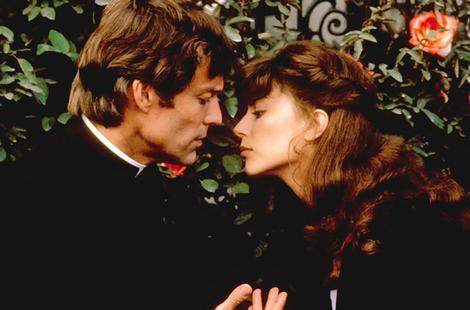
The Thorn Birds
The Thorn Birds (miniseries).jpg

The Thorn Birds is an American television miniseries broadcast on ABC from March 27 to 30, 1983.  It was directed by Daryl Duke and based on a novel by Colleen McCullough. The series was enormously successful and became the United States' second highest-rated miniseries of all time .


「The Thorn Birds」的圖片搜尋結果

*The Thorn Birds Summary

The Thorn Birds is a sweeping love story set on Drogheda, a sheep station in the Australian Outback. At its heart is the ill-fated romance of beautiful Meggie Cleary and the handsome Roman Catholic priest, Father Ralph de Bricassart. Forced to choose between the woman he loves, and the Church he is sworn(swear) to, Father Ralph's ambitions win, and he stays with the Church, eventually becoming a Cardinal in Rome. De Bricassart never realizes that Meggie's bright, compliant young son, Dane, is his child, even when the boy comes to Rome to study for the priesthood. After Dane's tragic death, Meggie must choose between her own comfort, and the independence of her beautiful, willful daughter Justine, a talented actress. McCullough's tome, almost 700 pages in length, details the private lives of three generations of the Cleary clan over 55 years, and paints a convincing portrait of the trials and rewards of life in the Australian desert, and one woman's doomed love for an unavailable man.

Meggie Cleary is a beautiful, but lonely little girl of nine with red-gold hair, when the family moves to Drogheda. Meggie's brothers are all busy with the ranch, and she is soon forced to quit school to care of the younger children. Ralph de Bricassart, a handsome young Roman Catholic priest, befriends the child. As Meggie grows into a beautiful young woman, the two fall in love, culminating in a kiss after a ball, when Meggie is 16 years old. Mary Carson, the clan matriarch, is jealous and ends the romance by bequeathing the enormous sheep ranch to the Roman Catholic Church, ensuring that De Bricassart will be elevated to bishop, far from Drogheda.

Heartbroken, Meggie marries Luke O'Neill, a man who looks like De Bricassart, and moves to Queensland. Meggie's husband has no interest in living with her, and travels around the countryside cutting sugar cane, forcing Meggie to work as a servant for a Queensland couple, Anne and Ludwig Mueller. During one of Luke O'Neill's rare conjugal visits, they conceive their daughter, Justine. Exhausted, and realizing her marriage is not viable, Meggie retreats to the honeymoon resort of Matlock alone, to sort out her future. Anne Mueller sends de Bricassart to join her, and the two conceive a son during a week long idyll. Meggie immediately realizes she is pregnant, and contrives to have sex with her husband, so the child will not be nameless. De Bricassart is transferred to Rome, and does not learn that he has fathered a son, until the boy is grown.

Meggie returns to Drogheda, where Justine grows into a fey, willful young woman, and her brother Dane becomes a sunny child. When Dane decides to become a priest, he travels to Rome to study under De Bricassart's tutelage. Meggie refuses to attend young Dane's ordination in Rome, feeling the Church has taken back the little happiness she stole from it. Just weeks later, Dane dies in Greece, while rescuing a drowning woman. Heartbroken, Justine decides to leave her acting career and lover in London and return to Drogheda. In an act of unselfish love, Meggie insists Justine must continue her own life in Europe, rather than submerging herself in Drogheda, as generations of Cleary women before her have done. The title of the novel is drawn from the legend of a bird that sings just once in its life, more sweetly than any other, but only at the cost of great pain. The title symbolizes the tenderness of the brief, forbidden love affair between Meggie and Father Ralph, resulting in pain and tragedy.

「The Thorn Birds」的圖片搜尋結果
---------------------------------------------------------------------------------------------------------------------
※titian:of a brownish-orange color
※auburn:of a reddish-brown color
※outback : isolated rural country especially of Australia
※deviations : departure from an established ideology or party line
※compliant :readily giving in to the command or authority of another
※sort out: to find an answer or solution for (something) 
※idyll:a very happy,peaceful and simple situation or period of time ,especially in the countryside
※fey:mysterious and strange ,or trying to appear like this
※tutelage: an act or process of serving as guardian or protector 
※ordination:the act or an instance of ordaining :  the state of being ordained
相關圖片
ordination
※bequeathing :to give or leave by will —used especially of personal property
※culminating: to bring to a head or to the highest point(climax)
※clan : a group of people tracing descent from a common ancestor 
※tome: a large or scholarly book
※ Cardinal:
 a high ecclesiastical official of the Roman Catholic Church who ranks next below the pope and is appointed by him to assist him as a member of the college of cardinals
----------------------------------------------------------------------------------------------------------------------


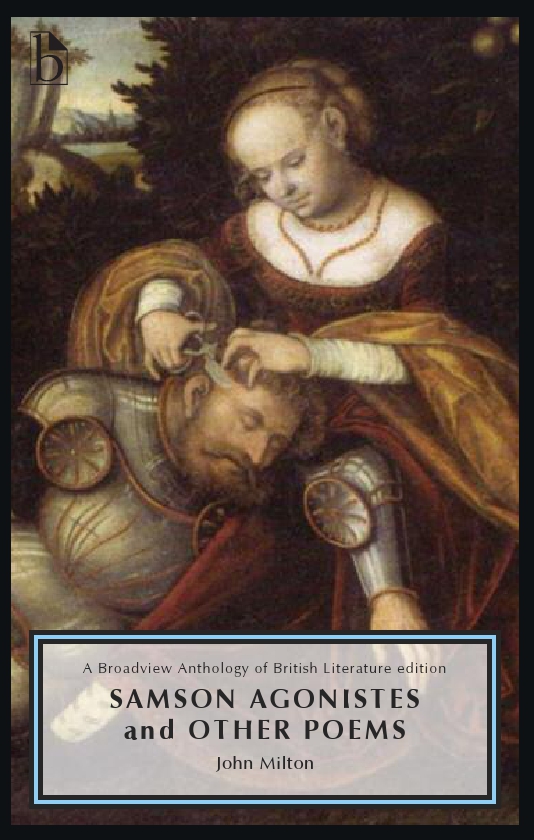
Samson Agonistes---by  John Milton
「samson agonistes」的圖片搜尋結果「samson agonistes」的圖片搜尋結果
Samson Agonistes  is a tragic closet drama by John Milton. It appeared with the publication of Milton's Paradise Regain'd in 1671, as the title page of that volume states: "Paradise Regained / A Poem / In IV Books / To Which Is Added / Samson Agonistes". It is generally thought that Samson Agonistes was begun around the same time as Paradise Regained but was completed after the larger work, possibly very close to the date of publishing, but there is no agreement on this.

SAMSON AGONISTES SUMMARY
「samson agonistes」的圖片搜尋結果


How It All Goes Down
It's a holiday for the Philistines when our poem opens, and this means that their Hebrew prisoner, Samson, gets a day off from the grueling labor he's usually forced to do. But he just can't relax. Instead, he obsesses over the various mistakes he's made in his life that have gotten him to this low point. Also, we learn that he's blind and that he feels he's betrayed his religion and his people.


In comes the Chorus, a group of his Hebrew friends. They try to be helpful, but they don't really have the lingo down and Samson seems to become more and more miserable. Then Manoa, Samson's father, shows up. He wants to negotiate with the Philistine authorities to secure Samson's release, but no dice. Samson feels that he deserves to be in prison. Hey, you can't stop a dad from trying—and off he goes to do just that.

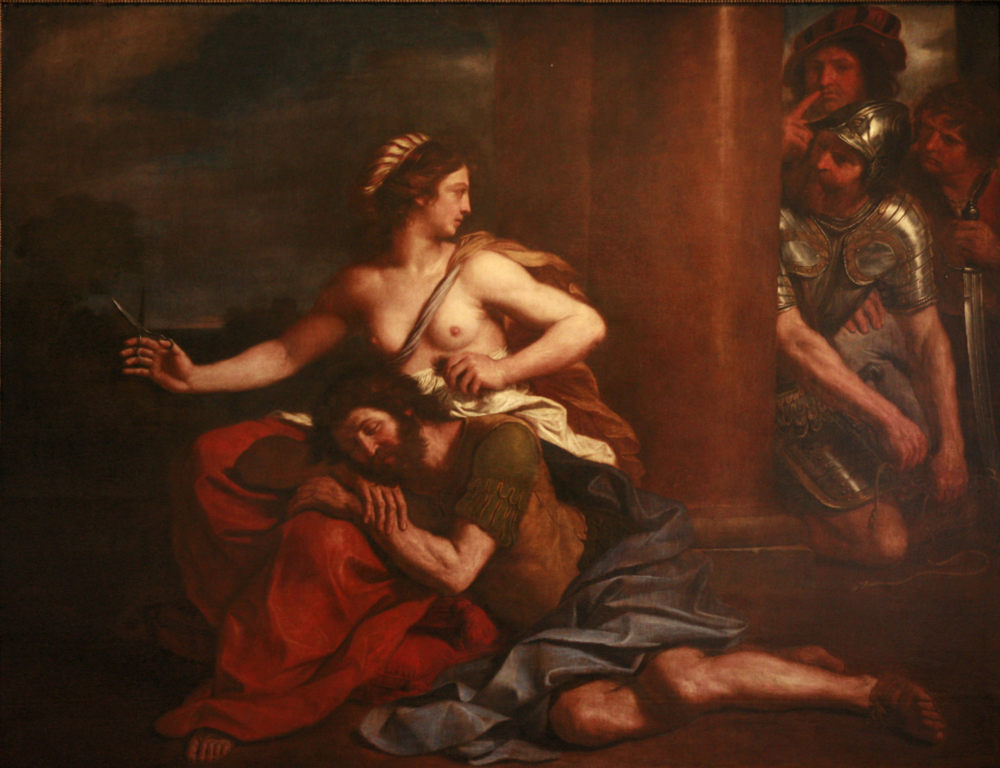
Shortly after his dad departs, Samson's infamous Philistine ex-wife Dalila pays a visit. We learn that she's the reason Samson is in prison: she betrayed the secret that his amazing strength depends on his having a flowing, luscious locks. She told her people, they cut his hair, arrested him, blinded him... and here he is in prison. But she's here to apologize and explain.
「samson and delilah」的圖片搜尋結果
Obviously, Samson is completely uninterested in hearing her excuses and says lots of insulting things to her. She leaves in a fury, with this parting shot: she's now a hero among her people.

Last but definitely not least is the Philistine giant Harapha, who says he's just come by to check out this famous Samson. He also says that he wishes Samson were in better physical condition so they could fight it out and see who's strongest. Samson is totally down, but Harapha won't fight a blind guy. They trash-talk for a while, and then Harapha leaves in a huff. Harumpha!

Just then, a messenger arrives with the order for Samson to come perform in a Philistine festival. Uh, no thanks, Samson says—and then thinks better of it, saying he has had this vague but powerful feeling that he's meant to go and perform some great deed. Off he trots, just missing his father, who's back with good news that he successfully bribed some Philistine leaders and can now take Samson home.

 We're starting to get a bad feeling about this—and we're right. Just as the Chorus is about to celebrate this good news, they hear a horrible shriek. Another messenger runs in and reports that Samson has killed both himself and the entire Philistine elite by toppling the roof of the theater.

The Chorus and Manoa alternate between being super sad over the death of Samson and super happy that their enemy has been defeated. In the end, they go off to look for Samson's body and Manoa promises he's going to build Samson an awesome tomb. And thus ends Samson.
「samson and delilah」的圖片搜尋結果